Living Expenses in Germany for Internationals in 2026
In Germany, a single person needs at least €992 per month (around $1,040 US dollars) or €11,904 per year to cover basic living expenses as of 2026. For a family of four, monthly expenses average €3,389 ($3,649 US dollars), excluding rent.
Quick Cost Breakdown by City Category:
Tier 1: Metropolitan Centers
Munich, Frankfurt, Hamburg, Berlin (central)Tier 2: Regional Capitals
Düsseldorf, Cologne, Heidelberg, Berlin (outer)Tier 3: Mid-sized Cities
Leipzig, Dresden, Nuremberg, KarlsruheTier 4: Smaller & Eastern Cities
Magdeburg, Chemnitz, Potsdam, ErfurtThis comprehensive guide breaks down living expenses by city category and resident type to help internationals effectively budget for education, work, or cultural experiences in Germany.
Monthly Budget by Resident Type:
- International Students: €900-1,500
- Working Professionals: €1,500-3,000+
- Interns: €800-1,300
- Language Students: €1,000-1,600
- Digital Nomads: €1,200-2,500

Monthly Living Expenses Breakdown
Understanding the cost structure across different German cities is essential for proper financial planning. Whether you’re looking to study in vibrant Berlin, work in business-centric Frankfurt, or experience the Bavarian lifestyle in Munich, your budget will vary significantly based on location and lifestyle choices.
| Expense Category | Tier 1 Munich, Frankfurt, Hamburg, Stuttgart, Berlin (central) | Tier 2 Düsseldorf, Cologne, Bonn, Heidelberg, Freiburg | Tier 3 Leipzig, Dresden, Nuremberg, Münster, Karlsruhe | Tier 4 Magdeburg, Potsdam, Erfurt, Chemnitz, Jena | Notes |
|---|---|---|---|---|---|
| Single Room Apartment | €700-1,000 | €550-750 | €400-600 | €300-450 | City center locations |
| Room in Shared Apartment | €450-700 | €350-550 | €280-400 | €220-350 | “WG-Zimmer” |
| Studio Apartment | €800-1,200 | €600-900 | €450-700 | €350-500 | “1-Zimmer Wohnung” |
| Food & Groceries | €230-300 | €200-250 | €180-230 | €160-200 | Cooking at home primarily |
| Public Transportation | €70-100 | €60-85 | €50-70 | €40-60 | Monthly pass |
| Utilities | €150-220 | €130-180 | €110-160 | €90-140 | Heating, electric, water |
| Internet & Mobile | €40-60 | €35-55 | €30-50 | €25-45 | Combined costs |
| Total Monthly (Single) | €1,420-2,230 | €1,185-1,830 | €990-1,600 | €805-1,365 | Basic lifestyle |
Additional Fixed Expenses to Consider:
- GEZ Media Fee: €18.36 monthly per household (mandatory)
- Liability Insurance: €3-7 monthly
- Personal Contents Insurance: €3-10 monthly
- Semester Fee (students): €150-350 per semester (varies by university)
City-Specific Considerations:

Expenses by Resident Type in Germany
Different types of internationals have varying budget needs and access to different benefits in Germany. Understanding the specific expenses and opportunities for your situation will help you plan effectively.
International Students
Working Professionals
Interns
Language Students
Digital Nomads / Remote Workers
Finding the Right Housing Solution
Securing appropriate accommodation is often the most challenging aspect of relocating to Germany. Various housing options exist depending on your status, budget, and planned duration of stay. The next section explores housing solutions and resources available to internationals in Germany.
Housing Solutions & Resources in Germany
Finding suitable accommodation is often the most challenging aspect of relocating to Germany. Housing options vary widely based on your budget, preferences, and intended length of stay. This guide presents the most reliable resources for different housing types across Germany.
University & Institution Housing
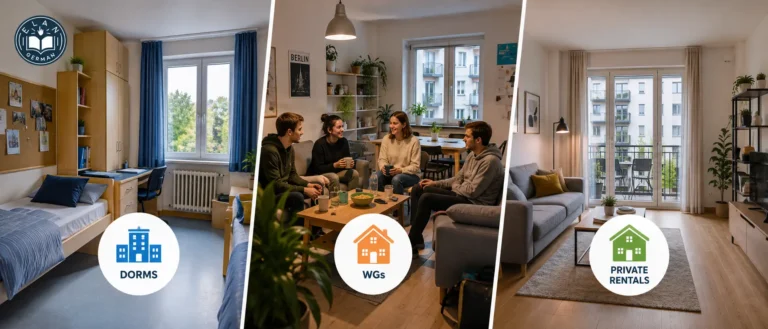
University-affiliated housing offers the most affordable options for students, typically ranging from €200-350 per month. These accommodations are managed by student services organisations and often include utilities and internet access.
Still confused about universities? Check out the top universities in Germany for international students!
Shared Accommodations (WG)
Shared apartments (“Wohngemeinschaft” or “WG”) are extremely popular in Germany, especially among students and young professionals. This option offers a balance of affordability and social connection, with prices ranging from €220-700 depending on the city.
Temporary & Flexible Housing
If you need accommodation quickly or for a limited period, these options offer more flexibility but often at a higher cost. They’re ideal for the initial weeks or months while you search for a more permanent solution.
Essential Housing Search Tips
Start Your Search Early
Begin looking for accommodation at least 2-3 months before your planned arrival, especially in larger cities.
Understand German Terms
“Kaltmiete” (cold rent) excludes utilities, while “Warmmiete” (warm rent) typically includes heating and sometimes other utilities.
Budget for Deposits
Security deposits (“Kaution”) are typically 2-3 months’ rent, refundable when you move out if there’s no damage.
Prepare Documentation
Have ready: proof of income, credit history (SCHUFA if available), copy of ID/passport, and visa/residence permit.
Consider Location Carefully
Balance cost savings from living outside city centres with transportation time and expenses.
With the right resources and preparation, you can find suitable accommodation in Germany that meets your needs and budget. Your housing choice will significantly impact your overall living expenses and quality of life, so take time to research the options thoroughly before making a decision.
Essential Insurance & Banking Information for Germany
Insurance Information
Health insurance is mandatory for all residents in Germany. While various other insurance types are available, having appropriate health coverage is a legal requirement. The cost ranges from €110-350 monthly, depending on your status and income level.
Health Insurance
Mandatory for residence permits and enrollment
Liability Insurance
Highly recommended for protection against accidental damage claims
Contents Insurance
Protects your personal belongings
Get Insurance with Special Discounts
For more information and to check prices, you can use these providers that offer English-language support and special discounts:
9HGCPZ9H
(€15 credit)
Banking & Money
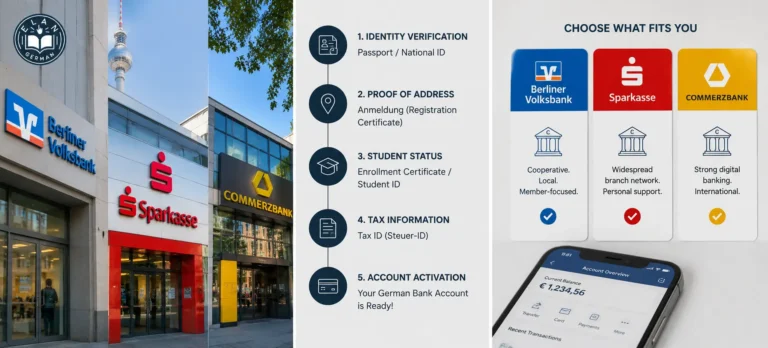
Setting up a German bank account is essential for apartment rentals, receiving a salary, and everyday transactions. Germany offers both traditional banks with physical branches and modern online-only banks with English interfaces.
Local Banks
Traditional banks with physical branches throughout Germany. Monthly fees may apply.
- Sparkasse
- Deutsche Bank
- Commerzbank
Online Banks
Modern digital banks with free accounts and good international features.
Cash Use
Germany remains partially cash-oriented; always keep some cash on hand, as many small businesses and restaurants may not accept cards.
EC Card
The EC Card (Girocard) is the widely accepted debit card system throughout Germany and is preferred over credit cards at many establishments.
Setting up proper insurance coverage and banking arrangements soon after arrival will give you peace of mind and help you integrate more smoothly into daily life in Germany. Most insurance providers and banks offer online applications, but be prepared to verify your identity either through video identification or at a post office using the PostIdent procedure.
How Much Do Groceries Cost in Germany?
The occasional restaurant meal can be a nice treat, but cooking at home is one of the most effective ways to manage your budget in Germany. Grocery prices in Germany are reasonable compared to many other Western European countries, especially if you shop at discount supermarkets.
Smart Grocery Shopping in Germany
Shop at Discount Supermarkets
Aldi, Lidl, Netto, and Penny offer the best value for everyday groceries. The quality is generally good, while prices can be 20-30% lower than at premium supermarkets like Edeka or Rewe.
Visit Weekly Markets
Most German cities have weekly farmers’ markets (Wochenmärkte) where you can find fresh, local produce. While not always cheaper, the quality is often better, and prices drop near closing time.
Look for “Eigenmarken”
Store brands (Eigenmarken) are significantly cheaper than name brands but are often produced by the same manufacturers. For example, Ja! (Rewe) or Gut & Günstig (Edeka) can save you 30-50%.
Check Weekly Flyers
Supermarkets publish weekly special offers (Angebote). These sales can save you 20-50% on selected items. Many Germans plan their shopping around these weekly deals.
Typical Monthly Grocery Budget in Germany
These budget ranges assume shopping primarily at discount supermarkets with occasional purchases from regular supermarkets or speciality stores. Actual costs vary based on dietary preferences, organic food choices, and regional price differences.
Entertainment & Leisure Costs in Germany
Germany offers a rich variety of leisure activities for all interests and budgets. From world-class cultural attractions to outdoor recreation, understanding the typical costs will help you plan your social life and entertainment budget effectively.
Cultural Activities
Sports & Recreation
Nightlife & Dining
Travel & Day Trips
Monthly Entertainment Budget by City Type
These monthly entertainment budgets assume a moderate social life including: 1-2 restaurant meals, 1 cinema visit, 2-3 drinks at bars/cafes, 1 cultural activity, and occasional sports/recreation. Students can often spend less by taking advantage of university discounts and free events.
Free & Low-Cost Activities in Germany
Public Parks & Gardens
German cities maintain beautiful public parks that host free concerts, cultural events, and seasonal festivals throughout the year.
City Walking Tours
Many cities offer free walking tours where guides work for tips. These provide excellent cultural and historical insights.
Seasonal Festivals
From Christmas markets to summer street festivals, Germany has free public celebrations throughout the year with music and entertainment.
Gallery Openings
Art gallery opening nights typically offer free entry, often with complimentary drinks and the chance to meet artists.
University Events
Universities host numerous free lectures, concerts, film screenings, and cultural events that are often open to the public.
Hiking Trails
Germany has an extensive network of well-maintained hiking trails accessible by public transportation, perfect for day trips.
Transportation Costs in Germany
Germany offers one of Europe’s best transportation networks, with efficient public transport in cities and extensive rail connections between regions. Understanding these transportation options and their costs is essential for planning your daily budget and travel expenses.
Public Transportation
German cities have comprehensive networks of buses, trams, U-Bahn (subway), and S-Bahn (suburban trains) operated by local transport associations. Most cities use an integrated ticket system valid across all transport types within designated zones.
Public Transport Costs by City Type
For €63 per month, the Deutschlandticket offers unlimited nationwide travel on all local and regional public transport (including buses, trams, U-Bahn, S-Bahn, and regional trains). This makes it one of the best transport deals in Europe, especially if you commute regularly or plan to explore different regions.
Cycling
Cycling is extremely popular in Germany, with many cities featuring excellent bike infrastructure. It’s often the fastest way to get around in city centers and represents significant cost savings compared to public transport or car ownership.
The most bike-friendly German cities include Münster, Karlsruhe, Freiburg, and Bremen. In these cities, cycling can be your primary transportation mode year-round thanks to extensive bike lanes and bike-friendly traffic policies.
Car Ownership
While not necessary in most German cities due to excellent public transport, some internationals (especially those in rural areas or with families) may want a car. Car ownership in Germany comes with significant costs beyond the purchase price.
Monthly Car Ownership Expenses
Car sharing services like Share Now, SIXT share, or stadtmobil offer a cost-effective alternative to car ownership. Registration costs around €9-29, and usage rates typically range from €0.26-0.39 per minute or €14-60 per hour, depending on the car model.
Long-Distance Travel
Germany’s central location in Europe makes it ideal for exploring neighbouring countries. Several transportation options are available for both domestic and international travel, with varying price points.
If you travel frequently by train, consider purchasing a BahnCard. The BahnCard 25 costs €59.90 per year (€39.90 for students/seniors) and gives you 25% off all ticket prices. The BahnCard 50 costs €244 per year (€122 for students/seniors) and provides 50% off on standard fares.
Making the Right Transportation Choice
Your transportation needs and costs in Germany will depend significantly on where you live and your lifestyle. In major cities, public transport and cycling are usually the most cost-effective options, with car ownership being an unnecessary expense. The Deutschland Ticket has revolutionised regional travel, making it more affordable than ever to explore Germany.For internationals living in rural areas, a car might be necessary, but consider looking for carpooling options with colleagues or neighbours to share costs. The excellent long-distance train network also means weekend trips are easily accessible without a car.Cost-Saving Strategies in Germany
Living comfortably in Germany doesn’t have to break the bank. With smart planning and local knowledge, internationals can significantly reduce their monthly expenses while maintaining a good quality of life.

Everyday Expenses
Groceries
Discount supermarkets (Aldi, Lidl, Netto, Penny) vs. premium stores like Edeka or Rewe. Save 20-30% on your grocery bill by shopping at discounters.
Dining
University canteens (Mensa) are open to the public; lunch specials at restaurants (Mittagsmenü) offer full meals at reduced prices.
Mobile Plans
Prepaid options (Aldi Talk, Lidl Connect) vs. contracts(O2, Vodafone, WinSim, etc). Discount providers offer comparable coverage at lower prices.
Utilities
Compare providers on comparison portals like Check24 or Verivox to find the best rates for electricity, gas, and internet.
Second-hand
Kleinanzeigen, Facebook Marketplace for furniture and appliances. Used items are significantly cheaper and often in excellent condition.
Special Benefits
Many internationals in Germany are unaware of special benefits and programs that can significantly reduce their living costs:
Welcome Packages
Some cities offer newcomer benefits and cultural passes with discounts or free access to museums, pools, and other attractions.
Cultural Integration
Subsidized language courses through BAMF (Federal Office for Migration and Refugees) for eligible residents.
Tax Deductions
Relocation expenses often tax-deductible for working professionals. Keep all receipts related to your move.
City Cards
Tourism cards with public transport and attraction discounts, often available for residents too.
Community Resources
International centers at universities and municipalities offer free services, events, and information.
Seasonal Money-Saving Tips
Winter (December-February)
- Purchase winter clothing during end-of-season sales (February)
- Reduce heating costs by using programmable thermostats
- Take advantage of Christmas market food specials in early December
- Look for indoor activities with “Winter Special” discounts
Spring (March-May)
- Shop at weekend farmers’ markets for fresh, local produce at better prices
- Use spring cleaning time to sell unused items on Kleinanzeigen
- Book summer vacation accommodations early for better rates
- Take advantage of free outdoor activities in parks and public spaces
Summer (June-August)
- Cool your apartment efficiently with cross-ventilation instead of A/C
- Enjoy free public swimming areas at lakes instead of paid pools
- Take advantage of summer cultural festivals with free entertainment
- Use the longer daylight hours to reduce electricity consumption
Autumn (September-November)
- Stock up on summer items during end-of-season clearance sales
- Prepare your apartment for winter to reduce heating costs
- Look for student discounts as the academic year begins
- Harvest season means lower prices on local fruits and vegetables
Beyond Economics: Understanding German Social Life
Along with the economic aspects, you might also be interested in the social aspects of German life before making a move. You can get the idea of it here.
Monthly Budget Examples in Germany
Every person has different living circumstances and therefore different living expenses. To give you a concrete idea of typical costs, here are three real-world examples of monthly budgets for different types of residents in various German cities.
Johan, 28
Johan enjoys living in Berlin’s vibrant central district. With a good salary, he can afford a comfortable lifestyle while still saving over 20% of his income. His employer covers part of his health insurance, and he takes advantage of Berlin’s excellent public transportation.
Klara, 22
Klara lives on a tight budget, with her BAföG covering her basic expenses. She takes full advantage of free university activities like sports and events. She’s planning to get a part-time student job (up to 20 hours per week) to have more spending money and start saving.
Jürgen (56) & Ursula (54)
Jürgen and Ursula live outside Stuttgart in a fully paid-off home. With their children grown and substantial income, they can save over 60% of their earnings while still enjoying a comfortable lifestyle. They’re focusing on retirement planning and helping their daughter complete her education.
What These Examples Tell Us
These real-world budgets demonstrate how living costs vary significantly based on city, lifestyle, and personal circumstances. A student can survive on €800 per month in a smaller city, while a professional in Berlin needs at least €2,000 for a comfortable lifestyle. Families benefit from economies of scale in some expense categories but have higher overall costs.
When planning your move to Germany, consider not just the raw numbers but how your specific situation affects your budget. International students, working professionals, families, and retirees all have different financial needs and constraints.
FAQs: Living Expenses in Germany
What are the most expensive cities to live in Germany?
Munich, Frankfurt, Hamburg, Stuttgart, and central districts of Berlin are the Tier 1 metropolitan centers with the highest living costs due to strong job markets and high demand for housing.
How much should international students budget monthly for living in Germany?
International students should budget between €900-1,500 per month depending on location, with the financial requirement for a visa being proof of €11,208 annually.
Is health insurance mandatory in Germany?
Yes, health insurance is mandatory for all residents in Germany. For students, it costs about €110/month, while for other residents, it can range from €110-350 monthly depending on status and income level.
What are the typical monthly costs for accommodation in Germany?
Accommodation costs vary by city tier: a single-room apartment ranges from €300-450 in Tier 4 cities to €700-1,000 in Tier 1 cities, while shared apartments range from €220-350 in Tier 4 to €450-700 in Tier 1.
What additional fixed expenses should I budget for in Germany?
Additional fixed expenses include the GEZ media fee (€18.36 monthly per household), liability insurance (€3-7 monthly), personal contents insurance (€3-10 monthly), and semester fees for students (€150-350 per semester).
How can I find affordable housing in Germany?
Affordable housing options include university dormitories (Studentenwerk), shared apartments (WG-Gesucht, StudiWZ, WG-Suche), temporary housing platforms (Wunderflats, HousingAnywhere, Spotahome), and Facebook groups for specific cities.
How much do utilities typically cost in Germany?
Utilities (heating, electricity, water) typically cost between €90-140 in Tier 4 cities and €150-220 in Tier 1 cities, varying by season, with higher heating costs in northern and eastern cities during winter.
What work restrictions apply to international students in Germany?
International students are limited to 120 full days or 240 half days of work annually.
What are some effective cost-saving strategies for living in Germany?
Cost-saving strategies include shopping at discount supermarkets (Aldi, Lidl, Netto, Penny), dining at university canteens, using prepaid mobile plans, comparing utility providers, buying second-hand items, and taking advantage of city welcome packages and cultural passes.
Do I need to bring cash to Germany?
Yes, it’s advisable to keep some cash on hand as Germany remains partially cash-oriented, although EC cards (debit cards) are widely accepted throughout the country.RetryClaude can make mistakes. Please double-check the responses.
Discover more from Elan German
Subscribe to get the latest posts sent to your email.