

The Weimar Republic Explained: Germany Between the Wars
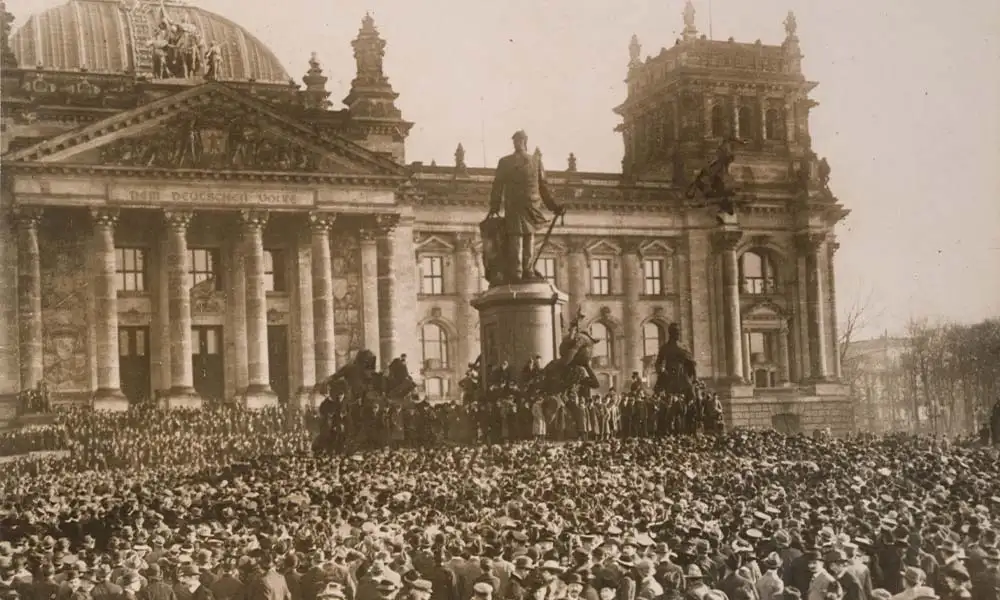
Here is the Weimar Republic explained in brief: it was Germany's government from 1919 to 1933, a defining chapter of Germany between wars history that ran from the end of World War One to the rise of the Nazi regime. It's remembered for two contradictory things happening simultaneously, a genuine cultural golden age in art, cinema, and intellectual life centered largely in Berlin, alongside crushing economic instability, including a period of hyperinflation so severe that banknotes became nearly worthless overnight. The republic also gave German women the vote for the first time in 1919, built one of the more progressive constitutions of its era, and still could not survive repeated political violence and economic shocks. Understanding both halves together, not just the collapse everyone remembers, is what actually explains how a period of extraordinary creative output ended in the fragile conditions that allowed extremism to take hold.
Weimar Republic Explained: A Genuine Cultural Golden Age
Berlin during the Weimar years became one of the most creatively significant cities in the world, the true heart of the Weimar culture golden age. Weimar cinema and art produced globally influential Expressionist films such as Fritz Lang's Metropolis and The Cabinet of Doctor Caligari, cabaret culture flourished with a boldness that challenged prevailing social norms, and the Bauhaus movement, founded by the architect Walter Gropius, redefined modern design and architecture during this same period. Intellectual life was similarly vibrant, with the city drawing writers, scientists, and artists from across Europe, including figures like the playwright Bertolt Brecht and the composer Kurt Weill, whose collaborations captured the era's restless, questioning mood.
This creative explosion partly grew out of the political freedom that followed the collapse of the monarchy. New artistic and social movements found genuine space to experiment in ways that had been restricted under the previous imperial government, and censorship laws that once controlled theater and print loosened considerably. Cafes like the Romanisches Café became informal meeting points for writers and critics, while the New Objectivity movement in painting turned a cold, unsentimental eye on poverty, war trauma, and city life rather than idealizing them.
Women's public life expanded rapidly too. The Weimar Constitution Germany adopted in 1919 granted women the right to vote for the first time, and more women entered universities, professional careers, and public political roles than at any earlier point in German history. Fashion, hairstyles, and public behavior shifted visibly away from prewar conventions, a change conservative commentators at the time frequently criticized as a symptom of moral decline rather than a natural response to a changing society.
Literature carried the era's contradictions just as vividly as film. Erich Maria Remarque's novel about the trenches of the First World War became an international bestseller and later a landmark film, capturing a generation's disillusionment with the war that had just ended. Radio broadcasting also began in Germany during these years, reaching ordinary households for the first time and creating a shared national culture that had simply not existed when news traveled mainly through newspapers. That same technology, ironically, would later become one of the most effective propaganda tools of the regime that replaced the republic. Theater also thrived under looser censorship, with directors experimenting boldly in staging and subject matter, tackling class conflict, sexuality, and war trauma in ways that would have been unthinkable on an imperial German stage only a decade earlier. Critics from outside Germany often traveled specifically to see these productions, cementing Berlin's reputation as a genuine rival to Paris and London as a center of modern European culture.
Weimar Republic Timeline: Key Years
The November Revolution forces the Kaiser to abdicate as Germany loses the war, and a provisional government declares a republic amid strikes, mutinies, and street protests across major cities.
The Weimar Constitution Germany adopted establishes the country's first democratic republic, though the harsh terms of the Treaty of Versailles, including a war guilt clause and enormous reparations, immediately burden the new government with debt and public resentment. Many Germans blamed the new democratic leaders for a defeat the military had actually made inevitable, a grievance later exploited as the so called stab in the back myth.
The Kapp Putsch, an attempted right wing coup in Berlin, briefly seizes the capital before collapsing under a general strike, an early sign of the weimar republic instability that would recur throughout the decade.
Weimar Republic hyperinflation reaches its most extreme point, with prices doubling every few days and savings becoming essentially worthless overnight. That same year, a young Adolf Hitler attempts the failed Beer Hall Putsch in Munich, an early episode in the rise of Hitler within the Weimar Republic's turbulent history.
A period of relative stabilization, aided by the Dawes Plan restructuring reparations payments and the Locarno Treaties easing tensions with France, allows the cultural golden age to flourish alongside cautious economic recovery.
The global economic crash triggers renewed instability, unemployment surges past six million within a few years, and political extremism on both the far right and far left gains real traction in parliament.
Chancellor Heinrich Brüning governs increasingly through emergency presidential decrees rather than ordinary parliamentary votes, a shift that normalized rule by decree well before the republic's final crisis.
The Nazi Party becomes the largest single party in the Reichstag without ever winning a true majority, exploiting a fragmented, proportional voting system that made stable coalition government almost impossible. Two national elections that year alone failed to produce a workable governing majority.
The Weimar Republic collapses as Hitler is appointed Chancellor in January, and the Reichstag Fire the following month is used to justify emergency powers that dismantle the remaining democratic institutions within months.
Why the Contrast Explains Weimar Republic Instability
The Weimar Republic's downfall wasn't simply economic or simply political, it was the combination of both instabilities compounding each other. This is the Weimar Republic explained at its core: a Weimar Republic economic crisis of hyperinflation destroyed public trust in the government's competence, while the later global economic crash reversed the fragile recovery of the mid 1920s. This left a population disillusioned by repeated economic shocks, creating exactly the conditions extremist political movements could exploit, even as the same society had recently produced some of its most celebrated cultural achievements.
The constitution itself carried a structural weakness that made this worse. Article 48 allowed the president to rule by emergency decree during a crisis, a provision meant to protect democracy that instead became a tool later used to bypass parliament entirely. Combined with a purely proportional electoral system that let small, ideologically extreme parties win seats easily, coalition governments changed constantly, some lasting only months, which left ordinary citizens with the impression that democracy itself simply could not get anything done. Paramilitary street violence between Communist and Nazi militias further eroded public order in cities throughout the final years, making the promise of strong, decisive leadership sound appealing to voters exhausted by chaos.
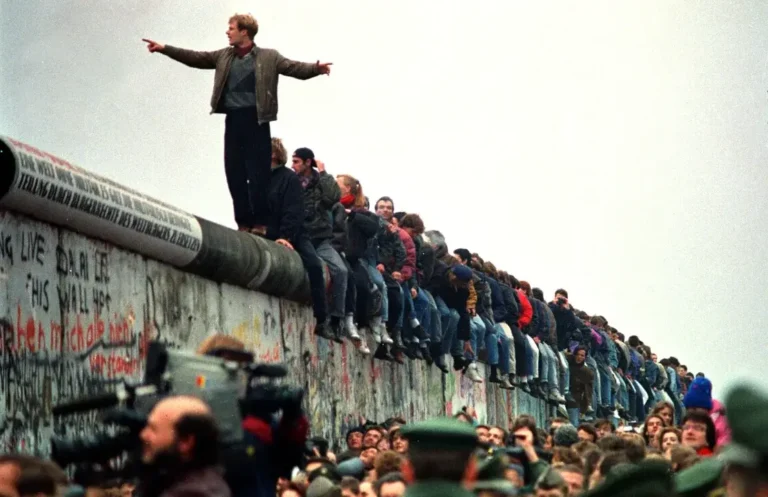
The reparations burden set by the Treaty of Versailles is worth understanding on its own terms, since it shaped nearly every economic decision the republic made. The total sum, revised more than once through international negotiations, was large enough that Germany was still making final payments on related loans decades later, well into the reunified era. That debt shaped foreign policy choices throughout the 1920s, pushing German negotiators toward agreements like the Locarno Treaties simply to buy the country some diplomatic breathing room. It also gave nationalist politicians a constant, visible grievance to point to in speeches and pamphlets, framing every tax rise or wage freeze as proof that the republic existed only to serve foreign creditors rather than German citizens. Readers curious about how Germany's story continued after this collapse, through the Second World War and into a divided nation, can follow the throughline in our guides on Berlin Wall history and life in East Germany, both later chapters shaped in part by the same unresolved tensions.
Official Archives and Museums
These official archival and museum sources offer deeper documentation for anyone who wants the Weimar Republic explained through primary records rather than a short summary.
FAQ: The Weimar Republic Explained: Germany Between the Wars
What years did the Weimar Republic cover?
From 1919, following World War One and the abdication of the Kaiser, to 1933, when Hitler was appointed Chancellor.
Why is the Weimar Republic known for its culture?
Berlin during this period became a center for Expressionist cinema, cabaret culture, the Bauhaus design movement, and vibrant intellectual life.
What was the hyperinflation crisis?
A period in 1923 when prices rose so rapidly, sometimes doubling within days, that savings and wages became nearly worthless almost overnight.
Why did the Weimar Republic collapse?
A combination of repeated economic shocks, including hyperinflation and the 1929 global crash, a fragmented parliament, and an emergency powers clause open to abuse, eroded public trust and created conditions extremist movements could exploit.
Was the Weimar Republic Germany's first democracy?
Yes, it established Germany’s first genuinely democratic constitution following the collapse of the imperial monarchy, and it also gave German women the vote for the first time.
What replaced the Weimar Republic?
The Nazi regime, following the rise of Hitler within the Weimar Republic’s final months as Chancellor in 1933 and the subsequent dismantling of democratic institutions after the Reichstag Fire.
Did the cultural golden age and economic instability happen at the same time?
They overlapped significantly, which is part of why the era is remembered as such a striking contrast between creative flourishing and political fragility.
What was Article 48, and why does it matter to Weimar Republic instability?
It lets the president rule by emergency decree during a crisis, a safeguard originally meant to protect the republic that was later used to bypass parliament and weaken democratic checks.
Discover more from Elan German
Subscribe to get the latest posts sent to your email.








One comment
[…] history, including the political fragmentation and street level unrest that had destabilized the Weimar Republic decades before the Cold War split the country in the first […]
Comments are closed.