
Life in East Germany DDR: What It Was Really Like
So, what was East Germany like day to day? Life in East Germany DDR, formally the German Democratic Republic, combined heavy state surveillance with a strong sense of social security many citizens didn't fully appreciate until it disappeared. The Stasi, the state security service, monitored citizens extensively, sometimes through networks of informants embedded in ordinary workplaces and apartment buildings. At the same time, the state guaranteed employment, subsidized housing, and free childcare, creating a predictable, if restricted, way of life. Consumer goods were often scarce, foreign travel was tightly controlled, and youth organizations shaped childhood from an early age, all part of what daily existence behind the Iron Curtain in Germany actually looked like for ordinary families. After reunification, many former East Germans experienced a genuine, complicated nostalgia for parts of this daily life, known as Ostalgie, distinct from any political endorsement of the regime itself.
Life in East Germany DDR: The Surveillance State Behind Everyday Life
The Stasi, formally the Ministry for State Security, maintained one of the most extensive domestic surveillance networks in modern history relative to population size, a level of Stasi surveillance DDR citizens rarely escaped. Estimates suggest the Stasi employed close to 100,000 official staff, backed by an even larger network of unofficial informants recruited from ordinary citizens, sometimes neighbors, coworkers, or even family members reporting on each other. Mail was opened, phone lines monitored, and dissent, even privately expressed, could carry real consequences ranging from job loss to imprisonment.
This surveillance shaped daily behavior in subtle ways, one of the everyday realities of East Germany communism that outsiders rarely see. Many East Germans learned to compartmentalize their private opinions from their public conversations, and open political discussion was largely confined to trusted family circles, if it happened at all. Children absorbed this caution early, since parents often coached them not to repeat certain comments made at home once they reached school.
Youth organizations reinforced the same values from the other direction. Nearly every child joined the Young Pioneers, and most teenagers moved on to the Free German Youth, both east German youth organizations built around loyalty to the state, physical fitness, and collective activities such as camping trips and parades. Membership was technically voluntary, but opting out could quietly limit a student's access to better schools or university places later on, so participation was close to universal in practice.
Ordinary people found small, quiet ways to push back within this system. Complaint letters to state newspapers, informal barter networks for scarce goods, and jokes told only among trusted friends became outlets for frustration that could not be expressed openly. Church communities, particularly in cities like Leipzig, also functioned as rare spaces somewhat outside direct state control, which is part of why churches later became gathering points for the protests that helped bring the system down in 1989.
Schools reinforced the same worldview from an early age. Lessons in history and civics were built around Marxist Leninist theory, and Russian was a required subject for most students long before English became widely taught. At the same time, East German society had one of the highest rates of female full time employment in Europe, since state run daycare made it normal, even expected, for mothers to return to work quickly after having children. This differed sharply from West Germany, where a single male income supporting a household was still the more common family model well into the 1970s.
DDR Daily Life: East vs West in the 1980s
| Aspect | East Germany | West Germany |
|---|---|---|
| Employment | State guaranteed, limited career mobility | Market driven, more choice, less security |
| Consumer goods | Frequent shortages, long waitlists for cars | Wide availability, consumer culture |
| Housing | Heavily subsidized, standardized apartments | Market rents, more variety |
| Childcare | Free, widely available state provision | Less centralized, often costlier |
| Travel | Restricted, foreign travel needed state approval | Largely unrestricted within Western Europe |
| Media | State controlled press and television | Independent and competing outlets |
| Youth life | Near universal Pioneer and Free German Youth membership | Varied clubs and voluntary associations |
The Trabant, East Germany's most iconic car and still the Trabant car DDR fans remember fondly, symbolizes this era well. Its waitlists sometimes stretched over a decade, and its simple two stroke engine became both a practical necessity and, later, an affectionate cultural symbol once production ended. Other DDR consumer goods followed a similar pattern, from coffee substitutes made partly from chicory during shortages to a handful of trusted household brands that East Germans still speak about with real affection.
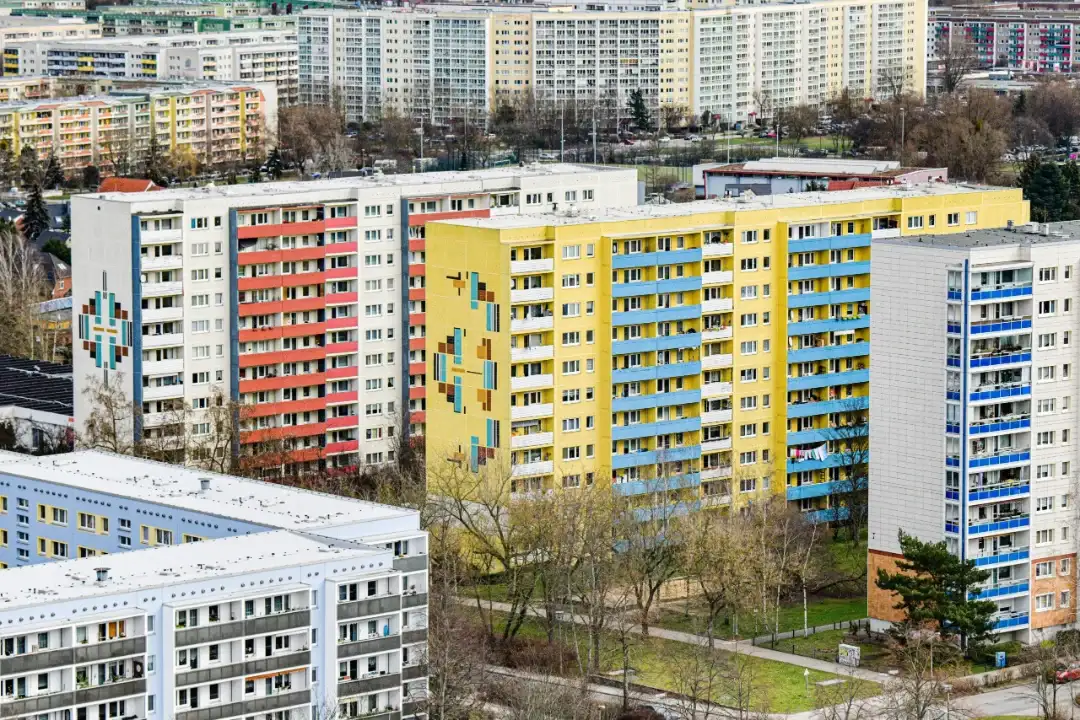
Housing followed its own logic too. Most families lived in standardized prefabricated apartment blocks known as Plattenbauten, which offered central heating and modern plumbing that many older, prewar buildings in the West still lacked at the time, even though the design was famously uniform from city to city. Rent was kept deliberately low, often below the real cost of maintenance, which meant buildings gradually fell into disrepair by the 1980s even as families paid almost nothing for the space itself.
Certain brands became household names precisely because alternatives barely existed. Vita Cola, a locally made cola alternative, Rotkäppchen sparkling wine, and pickled Spreewald cucumbers all survived reunification and are still sold today, often marketed deliberately toward the same DDR childhood memories that fuel Ostalgie. Coffee shortages in the 1970s were serious enough that the government blended real coffee with chicory and other fillers to stretch supplies, a compromise many older East Germans still remember vividly and half fondly.
Understanding Ostalgie
Ostalgie, a blend of "Ost" (East) and "Nostalgie" (nostalgia), describes the genuine fondness some former East Germans feel for specific aspects of DDR daily life, certain DDR childhood memories, familiar consumer brands, or a stronger sense of community in state run neighborhoods. It is not, generally, a longing for the surveillance state or political repression itself, but rather for a particular texture of everyday life that disappeared quickly after reunification, sometimes leaving people feeling their personal history had been erased along with the state. This is the core of the Ostalgie meaning that researchers and journalists keep returning to whenever the subject comes up in modern German media. For many, it remains one of the most recognizable threads in life in East Germany DDR memory today, showing up in everything from television nostalgia shows to themed cafes selling old DDR branded snacks.
East German society also produced a distinct sense of humor around its own limitations, with jokes about queuing for cars or scarce bananas becoming a shared cultural reference point that survived long after reunification. Museums and walking tours in Berlin and Leipzig now build entire experiences around this mix of hardship and genuine community memory, treating it as a serious part of twentieth century German history rather than a simple punchline.
Film and television played a large role in shaping how later generations understand this period. The movie Good Bye Lenin, released in 2003, told the story of a family shielding an ailing mother from the shock of reunification, and it introduced global audiences to Ostalgie as a concept rather than just a mood. Documentary series drawing on Stasi Records Archive material have since added more nuance, showing both the genuine warmth some East Germans felt toward their communities and the real fear that surveillance created for anyone who stepped out of line. Understanding both sides at once is really what separates a serious account of east German history from a simplified version that leans only on nostalgia or only on repression.
Sports offered one more window into this dual reality. East Germany invested heavily in elite athletics, producing a stream of Olympic medals far out of proportion to its small population, partly through rigorous early talent scouting in schools and partly through a state sponsored doping program that only became fully public knowledge after reunification. For many young East Germans, being selected for a sports academy felt like a genuine honor and a rare route to international travel, even though the full cost of that system, both physical and ethical, was hidden from the athletes themselves at the time.
Official Archives and Museums
These official archival and museum sources offer deeper documentation, records, and survivor accounts for anyone researching life in East Germany DDR firsthand.
FAQ: Life in East Germany DDR: What It Was Really Like
What was the Stasi?
East Germany’s Ministry for State Security was responsible for extensive domestic surveillance using both official staff and a large network of civilian informants.
Did East Germans have guaranteed jobs?
Yes, the state guaranteed employment, though career mobility and choice were limited compared to a market economy.
What does Ostalgie mean?
A nostalgia some former East Germans feel for specific aspects of DDR daily life, distinct from political support for the regime itself.
Were DDR consumer goods scarce?
Yes, shortages were common, and items like cars, most famously the Trabant, often required years-long waitlists.
Was healthcare free in East German society?
Yes, along with childcare, healthcare was provided by the state at low or no direct cost to citizens.
How many people worked for the Stasi?
Estimates suggest close to 100,000 official staff, supported by a much larger network of unofficial informants.
What were the east German youth organizations?
Nearly every child joined the Young Pioneers, and most teenagers went on to the Free German Youth, both built around loyalty to the state and collective activities.
Why do some Germans feel nostalgic for East Germany despite its restrictions?
Ostalgie often centers on specific memories, community bonds, or a sense of stability, rather than a longing for surveillance or political repression.
Discover more from Elan German
Subscribe to get the latest posts sent to your email.






One comment
[…] every legal and institutional standard used after 1990 came from the West. Our companion piece on life in East Germany looks at daily existence before the change, which helps explain why some older residents still feel […]
Comments are closed.