
German Public Transport Guide: Master Train, Bus & Metro Systems Like a Local
Understanding the Network Hierarchy of German Public Transport
The German public transportation system is a testament to engineering efficiency, connecting metropolises and villages through an intricate web of services. The Deutsche Bahn (DB) operates the nationwide rail network, with its prestigious InterCity Express (ICE) trains reaching speeds of up to 300 km/h between major cities. InterCity (IC) trains serve as a slower but more affordable alternative, while Regional Express (RE) and Regional Bahn (RB) connect smaller communities.
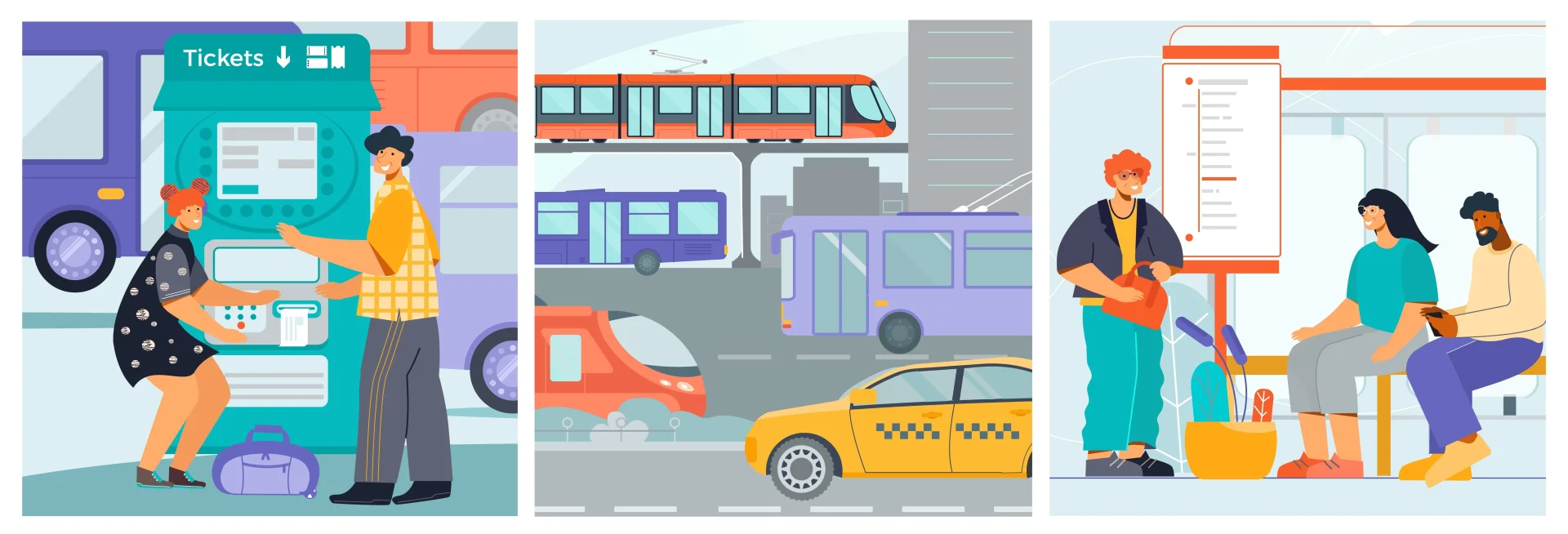
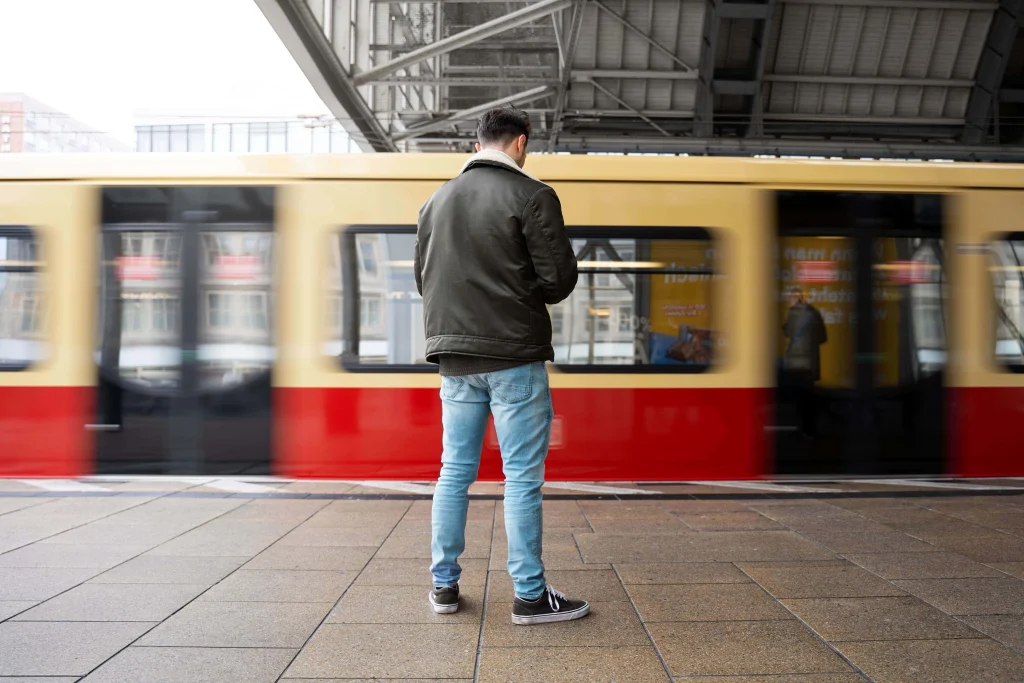
The system transforms into a complex network of U-Bahn (subway), S-Bahn (suburban trains), trams, and buses in urban areas. Each plays a crucial role: U-Bahn serves dense city centres, S-Bahn connects suburbs to downtown, trams bridge gaps between major routes, and buses reach areas where rail isn’t feasible.
Mastering the Ticket System
The ticket system’s complexity often surprises newcomers, but understanding it unlocks substantial savings. The revolutionary Deutschland-Ticket (€49/month) offers unlimited nationwide regional travel, transforming how locals move across the country. For occasional travellers, options include:
- Single tickets (Einzelfahrkarte): Perfect for one-off journeys
- Day passes (Tageskarte): Ideal for multiple trips within 24 hours
- Group tickets (Gruppenkarte): Cost-effective for up to five people
- BahnCard options: 25%, 50%, or 100% discounts for frequent travellers
Special discounted tickets are available for passengers with disabilities and their companions, with many regional transport associations offering additional concessions.
Navigating Languages
DB staff typically speak both German and English, especially in major cities and on long-distance routes. In tourist-heavy areas, you might find staff who speak additional languages like French, Spanish, or Italian. Announcements on ICE trains are made in both German and English, while regional services usually stick to German only
Digital Navigation Essentials
Modern German transit navigation revolves around digital tools. The DB Navigator app serves as your primary companion, offering:
- Real-time delay notifications
- Platform change alerts
- Alternative route suggestions
- Mobile ticket purchasing
- Seat reservations
- Accessibility information for stations and trains
The app includes an accessibility mode that highlights barrier-free routes and provides detailed information about elevator availability and platform access.
Here are major State/city-specific app links to book the tickets quickly or understand the transport Maps/Zones:
| City/Region | Primary App | Website | Physical Purchase Options |
|---|---|---|---|
| Berlin-Brandenburg (VBB) | BVG App, DB Navigator | bvg.de, vbb.de | Ticket machines, BVG service centres, select retail shops |
| Munich (MVV) | MVV App, MVG Fahrinfo | mvv.de | MVV/MVG ticket machines, customer centres, select newsstands |
| Hamburg (HVV) | HVV App | hvv.de | HVV service points, ticket machines, bus drivers (surcharge) |
| Frankfurt (RMV) | RMV App | rmv.de | RMV ticket machines, service centres, select retail partners |
| Cologne/Bonn (VRS) | VRS App, KVB App | vrs.de | VRS ticket machines, KVB customer centres |
| Stuttgart (VVS) | VVS Mobil, SSB Move | vvs.de | VVS ticket machines, SSB customer centres |
| Dresden (VVO) | DVB mobil, VVO NaviApp | dvb.de, vvo-online.de | DVB service points, ticket machines |
| Leipzig (MDV) | Leipzig MOVE, Easy.GO | l.de/verkehrsbetriebe | LVB customer service centres, ticket machines |
| Nuremberg (VGN) | VGN Fahrplan & Tickets | vgn.de | VGN ticket machines, customer service points |
| Rhine-Ruhr (VRR) | VRR App, Mutti App | vrr.de | VRR ticket machines, customer centres, select retailers |
| Mannheim/Heidelberg (VRN) | eTarif VRN, Ticket2Go | vrn.de | VRN ticket machines, service centres |
| Hannover (GVH) | GVH App | gvh.de | GVH ticket machines, service centres, on buses |
| Bremen/Lower Saxony (VBN) | FahrPlaner, VBN App | vbn.de | VBN ticket machines, customer centres |
| Freiburg (RVF) | VAG mobil | rvf.de | RVF ticket machines, VAG customer centre |
| Bavaria Regional | Bayern-Fahrplan | bahnland-bayern.de | DB ticket machines, customer centres |
| Baden-Württemberg Regional | bwegt | bwegt.de | DB ticket machines, bwegt mobility centres |
| Nationwide (DB) | DB Navigator | bahn.de | DB ticket machines, travel centres, authorised agencies |
Money-Saving Strategies
Strategic booking can dramatically reduce travel costs. Long-distance tickets booked up to six months in advance often cost 60% less than day-of purchases. The Super Sparpreis finder on DB’s website helps locate these deals. Weekend travel typically offers better rates, and regional trains, though slower, cost significantly less than ICE services. These strategies can help you plan your overall budget better.
Regional Quirks Worth Knowing
Each German city has developed its transport system to match local needs. Berlin’s extensive network features colour-coded lines and 24-hour weekend service on major routes. Munich’s system emphasizes precision and cleanliness, with strict enforcement of validation rules. Hamburg uniquely integrates waterway transport, with harbour ferries included in regular tickets.
Accessibility and Language Support
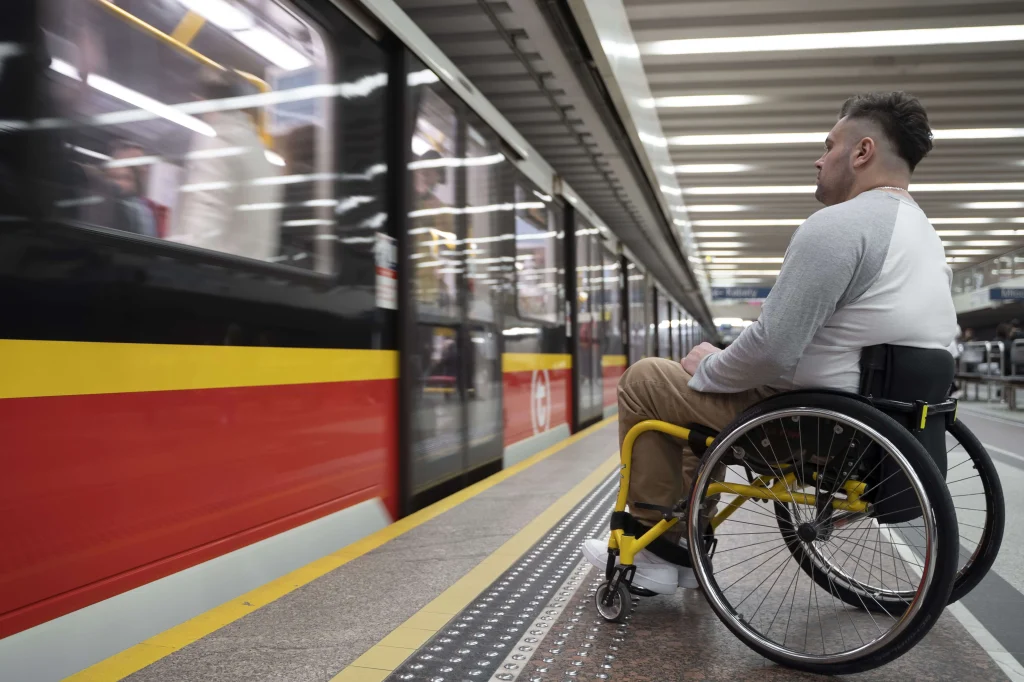
German public transport excels in accessibility features, making it one of Europe’s most inclusive systems. Every ICE train includes designated wheelchair spaces with adjacent seats for companions. Most stations feature:
- Elevators and ramps for platform access
- Tactile guidance systems for visually impaired travelers
- Clear audio announcements in German and English
- Information counters with accessibility specialists
- Pre-bookable mobility assistance through DB’s Mobility Service Center
Navigating Common Challenges
Regular travellers learn to anticipate and handle common issues:
- Track changes (“Gleisänderung”) occur frequently during delays
- Ticket validation is mandatory where machines are present
- Random checks occur regularly, with €60+ fines for invalid tickets
- Peak hours (7-9 AM, 4-6 PM) see significant crowding
- Some older stations might have temporary elevator outages
Environmental Commitment
The system’s environmental impact continues to improve, with Deutsche Bahn targeting complete carbon neutrality by 2040. Currently, all ICE trains run on 100% green electricity, making train travel significantly more eco-friendly than driving or flying.
Tips for Seamless Travel
For truly local-level navigation:
- Always arrive 5-10 minutes early for local transport
- Keep your ticket easily accessible for inspections
- Download offline maps for underground sections
- Learn basic German transport terms
- Enable push notifications for your regular routes
- Have backup routes planned for important journeys
- Check accessibility information before travelling
- Consider pre-booking assistance for complex journeys
The Current State of Deutsche Bahn or the German Public Transport System Overall
Recent years have highlighted significant challenges in the system’s reliability. Deutsche Bahn’s statistics reveal that nearly one-third of long-distance trains face delays exceeding 5 minutes. Infrastructure ageing, widespread construction projects, and staff shortages have contributed to these issues. Despite an €86 billion modernization program through 2025, seasoned travellers now habitually add 30-minute buffers to important journeys.
In conclusion, despite its challenges, the German public transport system remains one of Europe’s most comprehensive and inclusive networks. Understanding its intricacies transforms frustrating delays into manageable situations and opens up the entire country for exploration. Whether commuting daily or exploring on weekends, mastering these systems elevates your travel experience from tourist-level to true local expertise.
Remember, German efficiency extends to problem-solving: Staff are generally helpful and will assist you in finding solutions when issues arise, regardless of language barriers. The system’s commitment to accessibility and environmental sustainability makes it a model for public transportation worldwide.
Seasonal Travel Considerations
Germany’s public transport experiences distinct seasonal patterns worth planning around. Summer months (June- August) bring tourist crowds to major routes, particularly those connecting popular destinations like Neuschwanstein Castle or Lake Constance. The Christmas markets in December create significant congestion in city centers, with special market shuttles often available.
Winter travel in mountainous regions may face weather-related delays, though DB typically maintains impressive service levels even during snowfall. Many ski regions offer dedicated “winter sport tickets” that combine transport and lift passes at reduced rates.
For travelers seeking tranquility, the shoulder seasons of late April- early June and September- October offer ideal conditions: moderate crowds, reliable schedules, and often pleasant weather for exploring upon arrival.

Family-Friendly Travel Features
Families traveling with children benefit from numerous family-oriented services throughout the German transport network:
- Children under 6 travel free on all services
- Family compartments (Familienabteil) on long-distance trains provide extra space and proximity to baby-changing facilities
- Designated play areas on ICE trains keep young travelers entertained
- Family tickets in most transport associations offer significant discounts
- Stroller-friendly entrances on modern trams and buses
- Parent-child waiting areas at major stations with play equipment and comfortable seating
Parents should note that reservations become essential during school holidays, especially in summer and around Christmas, as trains fill quickly with family travelers.
Understanding Transport Zones and Tariff Systems
One of the most confusing aspects for newcomers is navigating Germany’s zone-based fare systems in metropolitan areas. Most cities divide their networks into concentric rings or zones, with ticket prices increasing as you travel across more zones.
For example, Berlin uses three primary zones (A, B, and C), with Zone A covering the city center, Zone B extending to the city limits, and Zone C including nearby suburbs. Munich employs numbered rings radiating outward from the city center, while Frankfurt uses a combination of numbered zones and fare levels.
Understanding your accommodation’s zone location relative to planned activities can lead to substantial savings. Zone maps are available at all major stations and through transport apps. When in doubt, station staff can quickly determine the optimal ticket for your journey patterns.
FAQs: German Public Transport
Is the Deutschland-Ticket worth it for short visits to Germany?
The Deutschland-Ticket (€58/month) becomes cost-effective even during visits lasting just 4-5 days if you plan to make several regional journeys. For example, a round-trip between Frankfurt and Heidelberg (about €50) already makes the ticket worthwhile. The ticket is calendar month-based, not for 30 consecutive days, so timing your visit to maximize a calendar month can provide excellent value. For visits under 3 days concentrated in a single region, local day passes may be more economical.
How reliable are connection times when changing trains?
Deutsche Bahn schedules typically allow 5-10 minutes for connections at smaller stations and 10-15 minutes at major hubs. While this is sufficient under normal operations, increasing infrastructure challenges make tight connections risky. For important journeys, aim for connections with at least 15-20 minutes of buffer time. When booking through the DB Navigator app, you can filter for connections with longer transfer times. Remember that German trains will not wait for delayed connecting services in most cases.
What's the best strategy for dealing with unexpected delays or cancellations?
When facing delays or cancellations, immediately consult the DB Navigator app, which will automatically recalculate your route options. For major disruptions, head to the DB information counters (marked with a white “i” on a blue background), where staff can issue you replacement tickets or travel authorizations at no additional cost. Your original ticket remains valid for alternative routes to your destination on the same day. For delays exceeding 60 minutes, you may be entitled to partial refunds through DB’s passenger rights program.
Are there any transport options not covered by standard tickets that tourists should know about?
Several unique transport options fall outside the standard ticket system. Historic funiculars (Bergbahnen) in cities like Heidelberg and Dresden typically require separate tickets. Scenic routes like the Zugspitze railway or the Harz narrow-gauge steam trains have their ticketing systems. River cruises on the Rhine, Moselle, and Elbe are not covered by transport passes, though some city passes in places like Hamburg include harbor ferry services. Premium panoramic trains like the GlacierExpress require supplementary bookings even with rail passes.
How accessible is German public transport for travelers with limited mobility?
While newer infrastructure offers excellent accessibility, travelers with mobility requirements should plan carefully. All new and renovated stations feature step-free access, but some historic stations still present challenges. The DB Navigator app and website offer detailed accessibility information for each station and train. The Mobility Service Center can arrange personalized assistance with 24 hours’ notice (recommended: 48 hours for international arrivals). Most modern trains feature level boarding on at least one car, and all ICE trains include wheelchair spaces with adjacent companion seating.
What are the most common mistakes tourists make when using German public transport?
Common pitfalls include: failing to validate tickets where required (particularly on regional services); underestimating transfer times at large stations like Frankfurt or Berlin; standing on the left side of escalators (blocking those walking up); entering U-Bahn or S-Bahn trains before letting passengers exit; missing the last train due to different weekend schedules; and purchasing unnecessarily expensive long-distance tickets when regional services would suffice. Perhaps most critically, many tourists don’t realize that seemingly “open” platforms still require valid tickets before boarding, leading to substantial fines during random checks.
How does the German transport system compare to other European countries?
Germany’s system generally offers more comprehensive coverage than Southern European networks but experiences more reliability issues than Swiss or Austrian services. Compared to France, Germany provides better regional connectivity but slightly slower high-speed services. Unlike the UK or Sweden, Germany maintains an integrated national system rather than a fragmented, privatized approach. German tickets typically cost less than Scandinavian equivalents but more than Eastern European options. The Deutschland-Ticket represents Europe’s most ambitious nationwide flat-rate system, significantly undercutting similar (but more limited) offers in Austria and Switzerland.
These additions should significantly expand your blog post while providing valuable, practical information for your readers. Would you like me to develop any of these sections further or address any other aspects of German public transport?RetryClaude can make mistakes. Please double-check the responses.
Which is the best overall app for traveling throughout Germany?
The DB Navigator app is the most comprehensive option for traveling throughout Germany. It covers the national rail network, provides real-time updates, and allows ticket purchases for both long-distance and many regional services. It functions in English and German, making it ideal for international travelers.
Which trains and transport services can I use with the Deutschland-Ticket?
The Deutschland-Ticket (€58/month) covers all regional public transport throughout Germany, including Regional Express (RE), Regional Bahn (RB), S-Bahn, U-Bahn, trams, and buses across all transport associations. It’s valid on all local and regional services but excludes long-distance trains such as ICE, IC, and EC services and private transport offerings like FlixTrain. You can travel from the North Sea to the Alps using only regional connections with this ticket. Some tourist-specific services like mountain railways, cable cars, and certain ferry services are excluded unless specifically noted by the local transport authority.
Discover more from Elan German
Subscribe to get the latest posts sent to your email.