

Elite Education: Top German Universities for International Students (Public & Private)
Why Study in Germany?
- Tuition-free public universities for all students, regardless of nationality (with only minimal semester fees)
- English-taught programs are increasingly available across disciplines
- Strong industry connections leading to excellent internship and employment opportunities
- High research output and cutting-edge facilities
- Affordable living costs compared to other Western European countries
Now, let’s explore Germany’s academic titans.
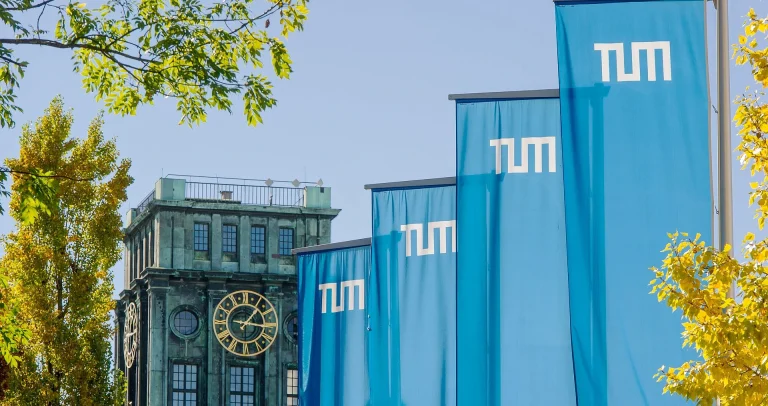
Technical University of Munich (TUM)
Founded in 1868, TUM consistently ranks as Germany’s top technical university and among Europe’s finest institutions.
Key Facts:
- Location: Munich, Bavaria
- Students: 45,000+ (20% international)
- Rankings:
- #38 QS World University Rankings 2025
- #1 in Germany
- #12 in Europe
- Focus Areas: Engineering, Natural Sciences, Medicine, Life Sciences
Strengths:
TUM excels in engineering disciplines, particularly mechanical engineering, electrical engineering, and computer science. Its Entrepreneurship Center has launched over 800 startups, earning TUM the reputation as Germany’s most entrepreneurial university.
The university maintains strong partnerships with industry giants like BMW, Siemens, and Google, creating robust pathways from classroom to career. TUM’s campus in Garching houses cutting-edge research facilities, including the Research Neutron Source Heinz Maier-Leibnitz.
Recommended Programs:
- Computational Science and Engineering (M.Sc.) – Taught entirely in English with an interdisciplinary approach
- Management & Technology (B.Sc./M.Sc.) – Combines technical expertise with business knowledge
- Data Engineering and Analytics (M.Sc.) – Prepares students for the booming data science industry
- Robotics, Cognition, Intelligence (M.Sc.) – Cutting-edge program at the intersection of AI and robotics
Student Experience:
TUM’s student life thrives with over 100 student initiatives ranging from Formula Student racing teams to cultural clubs. The university’s “TUMJA” program pairs international students with local buddies for cultural integration. Munich’s Oktoberfest, Christmas markets and proximity to the Alps provide unforgettable experiences outside the classroom.
Karlsruhe Institute of Technology (KIT)
Formed through a merger between the University of Karlsruhe and the Karlsruhe Research Center, KIT combines teaching excellence with world-class research capabilities.

Key Facts:
- Location: Karlsruhe, Baden-Württemberg
- Students: 25,000+ (16% international)
- Rankings:
- #146 QS World University Rankings 2025
- #5 in Germany
- #56 in Europe
- Focus Areas: Engineering, Natural Sciences, Computer Science, Economics
Strengths:
KIT’s engineering programs, particularly in mechanical engineering, electrical engineering, and chemical engineering, attract students worldwide. The institution’s close collaboration with the Karlsruhe Research Center gives students access to advanced research infrastructure rarely available in traditional universities.
KIT pioneered the field of engineering pedagogy in Germany and emphasizes practical application alongside theoretical knowledge. Its Center for Innovation and Entrepreneurship supports students in developing business ideas and launching startups.
Recommended Programs:
- Energy Engineering and Management (M.Sc.) – Addresses global energy challenges with technical and economic perspectives
- Optics & Photonics (M.Sc.) – Interdisciplinary program in a cutting-edge field
- Mobility Systems Engineering (M.Sc.) – Focuses on future mobility concepts
- Information Systems (B.Sc./M.Sc.) – Combines computer science with business applications
Student Experience:
KIT’s “X-Student Groups” initiative funds innovative student projects, from electric racing cars to synthetic biology competitions. The campus hosts Germany’s largest science slam, where researchers present complex topics in entertaining 10-minute talks. Karlsruhe’s Palace Garden provides a scenic study spot, while the nearby Black Forest offers weekend hiking adventures.
RWTH Aachen University
Key Facts:
- Location: Aachen, North Rhine-Westphalia
- Students: 47,000+ (25% international)
- Rankings:
- #135 QS World University Rankings 2025
- #4 in Germany
- #53 in Europe
- Focus Areas: Engineering, Computer Science, Natural Sciences, Medicine
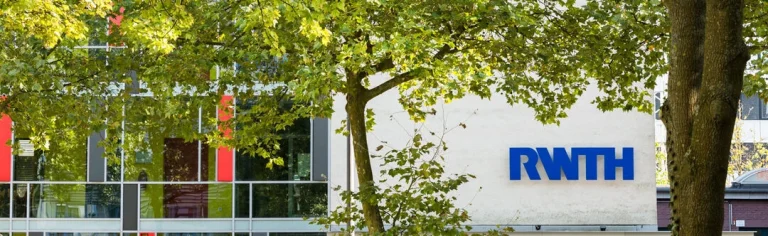
RWTH Aachen’s engineering programs—particularly mechanical engineering, automotive engineering, and production technology—maintain exceptional reputations globally. The university’s proximity to industrial regions in Germany, Belgium, and the Netherlands creates a rich ecosystem for research and development.
The RWTH Aachen Campus project, one of Europe’s largest research campuses, brings together academia and industry in 16 research clusters. This structure promotes interdisciplinary collaboration and accelerates innovation.
Recommended Programs:
- Automotive Engineering (M.Sc.) – Partners with major vehicle manufacturers
- Communication and Information Engineering (M.Sc.) – Combines electrical engineering with information technology
- Production Systems Engineering (M.Sc.) – Focuses on Industry 4.0 and smart manufacturing
- Textile Engineering (M.Sc.) – Unique program with applications ranging from fashion to medical textiles
Student Experience:
RWTH’s annual “Lousberglauf” race, where thousands of students run up the city’s steepest hill, has become a beloved tradition. The university’s “Collective Student Workspace” (COWORK) provides a creative environment for interdisciplinary projects. Aachen’s location at the border triangle of Germany, Belgium, and the Netherlands allows students to explore three countries in a single day trip.
Ludwig Maximilian University of Munich (LMU)
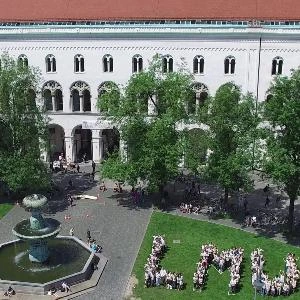
Key Facts:
- Location: Munich, Bavaria
- Students: 50,000+ (16% international)
- Rankings:
- #59 QS World University Rankings 2025
- #2 in Germany
- #15 in Europe
- Focus Areas: Humanities, Social Sciences, Law, Medicine, Natural Sciences
Strengths:
Unlike the technical universities mentioned earlier, LMU excels across diverse disciplines. Its humanities and social science departments rank among Europe’s finest, while its medical faculty operates one of Germany’s largest university hospitals.
LMU has produced 42 Nobel laureates, demonstrating its research prowess. The university’s Gene Center pioneered molecular biology research in Germany, while its Center for Advanced Studies promotes interdisciplinary dialogue among leading researchers.
Recommended Programs:
- Neurosciences (M.Sc.) – Interdisciplinary program with strong research component
- European Ethnology (B.A./M.A.) – Explores European cultural diversity
- Economics (M.Sc.) – Strong quantitative focus with international orientation
- Evolution, Ecology and Systematics (M.Sc.) – Field research opportunities across Europe
Student Experience:
LMU’s “Studentenstadt” residence complex forms its mini-city with diverse cultural events and the famous “Bierstube” student pub. The university’s museums offer free entry to students, including the Museum of Casts of Classical Sculptures and the Museum of Paleontology. LMU’s central location places students minutes away from Munich’s English Garden — one of the world’s largest urban parks.
Technical University of Berlin (TU Berlin)
Key Facts:
- Location: Berlin
- Students: 34,000+ (27% international)
- Rankings:
- #159 QS World University Rankings 2025
- #7 in Germany
- #63 in Europe
- Focus Areas: Engineering, Computer Science, Mathematics, Natural Sciences, Economics

TU Berlin excels in engineering disciplines, particularly in electrical engineering, computer science, and industrial engineering. The university’s Center for Entrepreneurship has launched over 300 startups, making it a hub for innovation in Berlin’s thriving tech scene.
The Einstein Center Digital Future, a joint initiative with other Berlin universities, positions TU Berlin at the forefront of digitalization research. The university’s urban location facilitates partnerships with nearby research institutions and technology companies.
Recommended Programs:
- Urban Design (M.Sc.) – Leverages Berlin as an urban laboratory
- Computational Neuroscience (M.Sc.) – Interdisciplinary program with strong research focus
- Computer Science (M.Sc.) – Connected to Berlin’s vibrant tech startup scene
- Innovation Management and Entrepreneurship (M.Sc.) – Practical focus on launching tech ventures
Student Experience:
TU Berlin’s “Buddy Program” partners international students with locals for cultural exchange. The university’s MakerSpace provides 3D printers, laser cutters, and prototyping tools for student projects. Berlin’s legendary nightlife, with clubs like Berghain and Tresor, offers weekend diversions, while the city’s 175 museums provide cultural enrichment.
Other Public Universities
| University | Location | Ranking | Unique Strength | Recommended Programs |
|---|---|---|---|---|
| Heidelberg University | Heidelberg, Baden-Württemberg | #65 QS World Rankings 2025 | Germany's oldest university (founded 1386) with excellence in medicine and life sciences |
- Molecular Biosciences (M.Sc.) - Translation Studies for Information Technologies (M.A.) - Medical Informatics (M.Sc.) - International Health (M.Sc.) |
| Humboldt University of Berlin | Berlin | #131 QS World Rankings 2025 | Historic institution where 55 Nobel Prize winners studied or taught |
- Global Studies (M.A.) - Quantitative Economics (M.Sc.) - Data Science (M.Sc.) - Philosophy & History of Science (M.A.) |
| TU Dresden | Dresden, Saxony | #191 QS World Rankings 2025 | "University of Excellence" status with strong microelectronics focus |
- Nanoelectronic Systems (M.Sc.) - Biodiversity and Collection Management (M.Sc.) - Computational Modeling and Simulation (M.Sc.) - Organic and Molecular Electronics (M.Sc.) |
| University of Hamburg | Hamburg | #201 QS World Rankings 2025 | Located in Germany's wealthiest city with exceptional maritime study options |
- International Business and Sustainability (M.Sc.) - Ship Science and Maritime Technology (M.Sc.) - Peace and Security Studies (M.A.) - International Criminology (M.A.) |
| University of Freiburg | Freiburg, Baden-Württemberg | #189 QS World Rankings 2025 | Located in Germany's sunniest city with strong emphasis on sustainability |
- Environmental Governance (M.Sc.) - Renewable Energy Engineering and Management (M.Sc.) - Microsystems Engineering (M.Sc.) - Global Urban Health (M.Sc.) |
Private Universities
| University | Location | Accreditation/Ranking | Unique Strength | Recommended Programs |
|---|---|---|---|---|
| EBS University of Business and Law | Wiesbaden/Oestrich-Winkel, Hesse | Triple-accredited (EQUIS, FIBAA, AACSB) | Strong focus on personal development and career preparation |
- Master in Finance (M.Sc.) - Digital Business (M.Sc.) - Real Estate (M.Sc.) - Business Law (LL.B./LL.M.) |
| CODE University of Applied Sciences | Berlin | Founded by industry leaders from Europe's tech sector | Project-based learning with industry mentors |
- Product Management (B.A.) - Interaction Design (B.A.) - Software Engineering (B.Sc.) - Data Science (B.Sc.) |
| Hertie School | Berlin | Member of APSIA | Specialized in public policy and international affairs |
- Master of Public Policy - Master of International Affairs - Master of Data Science for Public Policy - Executive Master of Public Administration |
| Bard College Berlin | Berlin | 8:1 student-faculty ratio | Liberal arts education with small class sizes |
- Humanities, the Arts, and Social Thought (B.A.) - Economics, Politics, and Social Thought (B.A.) - Ethics and Politics (M.A.) - Global Studies (M.A.) |
| ESMT Berlin | Berlin | Triple Crown accreditation (AACSB, AMBA, EQUIS) | Founded by 25 leading German companies including Siemens and Lufthansa |
- Master in Management (M.Sc.) - Master in Global Management (M.Sc.) - Full-time MBA - Executive MBA |
Notable Universities of Applied Sciences (Fachhochschulen)
| University | Location | Unique Strength | Recommended Programs |
|---|---|---|---|
| Munich University of Applied Sciences | Munich | Germany's second-largest university of applied sciences with strong industry ties |
- Engineering Physics (B.Eng./M.Eng.) - Photonics (M.Sc.) - International Business (B.A./M.A.) - Scientific Computing (M.Sc.) |
| HAW Hamburg | Hamburg | Strong focus on renewable energy and environmental technology |
- Information Engineering (B.Sc./M.Sc.) - Renewable Energy Systems (M.Sc.) - Aircraft Systems Engineering (B.Eng./M.Eng.) - Environmental Engineering (B.Eng./M.Eng.) |
Notable Private Universities for Arts and Design
| University | Location | Unique Strength | Recommended Programs |
|---|---|---|---|
| UdK Berlin (Berlin University of the Arts) | Berlin | One of Europe's largest and most diverse arts institutions |
- Sound Studies and Sonic Arts (M.A.) - Art in Context (M.A.) - Visual Communication (B.A./M.A.) - Stage Design (B.A./M.A.) |
| Bauhaus University Weimar | Weimar | Continues the legacy of the influential Bauhaus movement |
- Media Architecture (M.Sc.) - Public Art and New Artistic Strategies (M.F.A.) - Human-Computer Interaction (M.Sc.) - European Urban Studies (M.Sc.) |
Beyond the Classroom: What Makes Student Life Special in Germany
Cultural Integration Through "Hochschulsport"
"Mensa" Culture
Semester Ticket Freedom
Student Initiatives ("Fachschaften")
Summer and Winter Festivals
Application Process for International Students
- Check eligibility: Ensure your secondary education qualifies you for university admission in Germany (Uni-Assist or the university’s international office can evaluate this).
- Language requirements: Most bachelor’s programs require German proficiency (TestDaF or DSH examination). English-taught programs, especially at the Master’s level, require IELTS or TOEFL scores.
- Application deadlines:
- Winter semester (October start): Usually mid-July
- Summer semester (April start): Usually mid-January
- Required documents:
- Certified copies of previous academic certificates
- Proof of language proficiency
- Motivation letter (for some programs)
- CV/resume
- Passport copy
- Visa application: Non-EU students need to apply for a student visa after receiving university admission.
Financing Your Studies in Germany
- Monthly budget: €850-1000 (higher in Munich and Frankfurt)
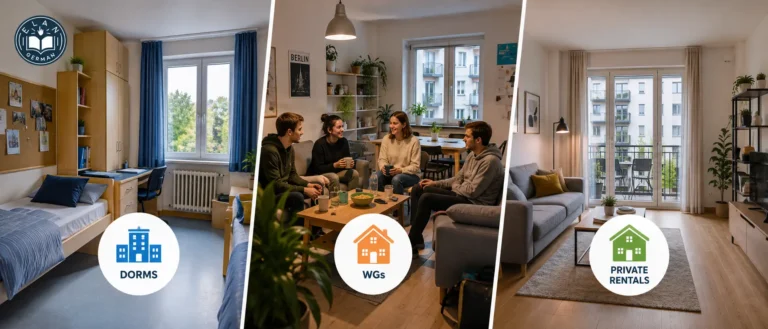
- Accommodation: €300-600 per month (university dormitories offer affordable options)
- Health insurance: Mandatory for all students (approximately €110 monthly)
Check our article about monthly expenses here specifically created for different city tiers.
- DAAD Scholarships: Germany’s primary funding organization for international academic exchange
- Erasmus+ Program: For EU students and partner countries
- University-specific scholarships: Check individual university websites
- Working part-time: Students can work up to 120 full days or 240 half-days per year
- “Werkstudent” positions: Part-time professional work in your field of study, often paying €12-20/hour
Why Choose Germany for Higher Education?
Germany offers a compelling package for international students: world-class education, minimal tuition fees, diverse program offerings, and excellent career prospects. Whether you prefer the technical excellence of TUM, KIT, and RWTH Aachen, the comprehensive academic scope of LMU, or the urban dynamism of TU Berlin, Germany provides educational environments that foster both academic and personal growth.
The country’s strong economy, central European location, and welcoming attitude toward international talent make it not just a place to study, but potentially a place to build your future career. As you consider your options, remember that German universities value independent thinking and self-organization—qualities that will serve you well beyond your academic journey.
In case you need additional information and guidance, you can always Contact Elan German for a detailed admission plan.
Viel Erfolg (Good luck) with your applications!
FAQs
Do international students need to speak German to study in Germany?
Not necessarily. While most Bachelor’s programs are taught in German, many universities offer Master’s programs entirely in English, especially in technical and business fields. Top universities like TUM, RWTH Aachen, and TU Berlin have extensive English-taught options. However, learning basic German will significantly enhance your daily life experience, especially in smaller towns.
How much does it cost to study in Germany as an international student?
Public universities in Germany charge minimal or no tuition fees regardless of nationality (just semester fees of €100-350). However, students need around €850-1000 monthly for living expenses, including accommodation (€300-600), food, health insurance (€110), and other costs. Private universities charge tuition fees ranging from €6,000-20,000 per year.
What are the admission requirements for international students?
Requirements include a recognized secondary school certificate equivalent to the German Abitur, proof of language proficiency (German for German-taught programs or English for English-taught programs), and sometimes program-specific requirements like GRE/GMAT for certain Master’s programs. Uni-Assist evaluates international credentials for most universities.
What makes German technical universities different from other European institutions?
German technical universities emphasize practical experience alongside theoretical knowledge, maintain strong industry connections leading to internships and job opportunities, offer extensive laboratory facilities, and focus on applied research. The close relationship between academics and industry creates a direct pathway from education to employment.
Can international students work while studying in Germany?
Yes, international students can work up to 120 full days or 240 half days per year without needing an additional permit. Many students find “Werkstudent” positions related to their field of study, which typically pay €12-20/hour. Working beyond these limits requires approval from the Federal Employment Agency and Foreign Office.
What scholarships are available for international students in Germany?
The German Academic Exchange Service (DAAD) offers numerous scholarships for international students. Additionally, universities have their scholarship programs, and foundation scholarships like those from the Heinrich Böll Foundation or the Konrad Adenauer Foundation are available. Germany also has state-specific scholarships and excellence programs for top students.
What happens after graduation? Can international students stay in Germany?
International graduates from German universities can apply for an 18-month residence permit to seek employment related to their degree. Once you find suitable employment, you can apply for an EU Blue Card or other long-term work permits. After working in Germany for several years, you may become eligible for permanent residency.
Discover more from Elan German
Subscribe to get the latest posts sent to your email.