German Castles. Neuschwanstein Castle in Bavaria

15 Famous German Castles You Need to Visit at Least Once

Germany has more castles than any other country in Europe, with over 20,000 known sites scattered across its forests, river valleys, and hilltops. From the fairy tale turrets of Neuschwanstein in Bavaria (yes, the one that inspired Disney) to the haunting ruins of Heidelberg Castle above the Neckar River, these medieval fortresses span more than a thousand years of history. Whether you are planning a castle road trip, a day trip from Berlin, or just exploring what Germany has to offer, this guide covers the 15 most iconic German castles, what makes each one worth visiting, and what to expect when you arrive.

20,000+ Castles & Castle Sites
3 UNESCO Heritage Castles
4M+ Visitors at Neuschwanstein Yearly
1,000+ Years of Castle History

The 15 Best German Castles

Most of these are reachable by public transport. Before you head out, our German Public Transport Guide covers trains, regional rail, and how to navigate between cities.

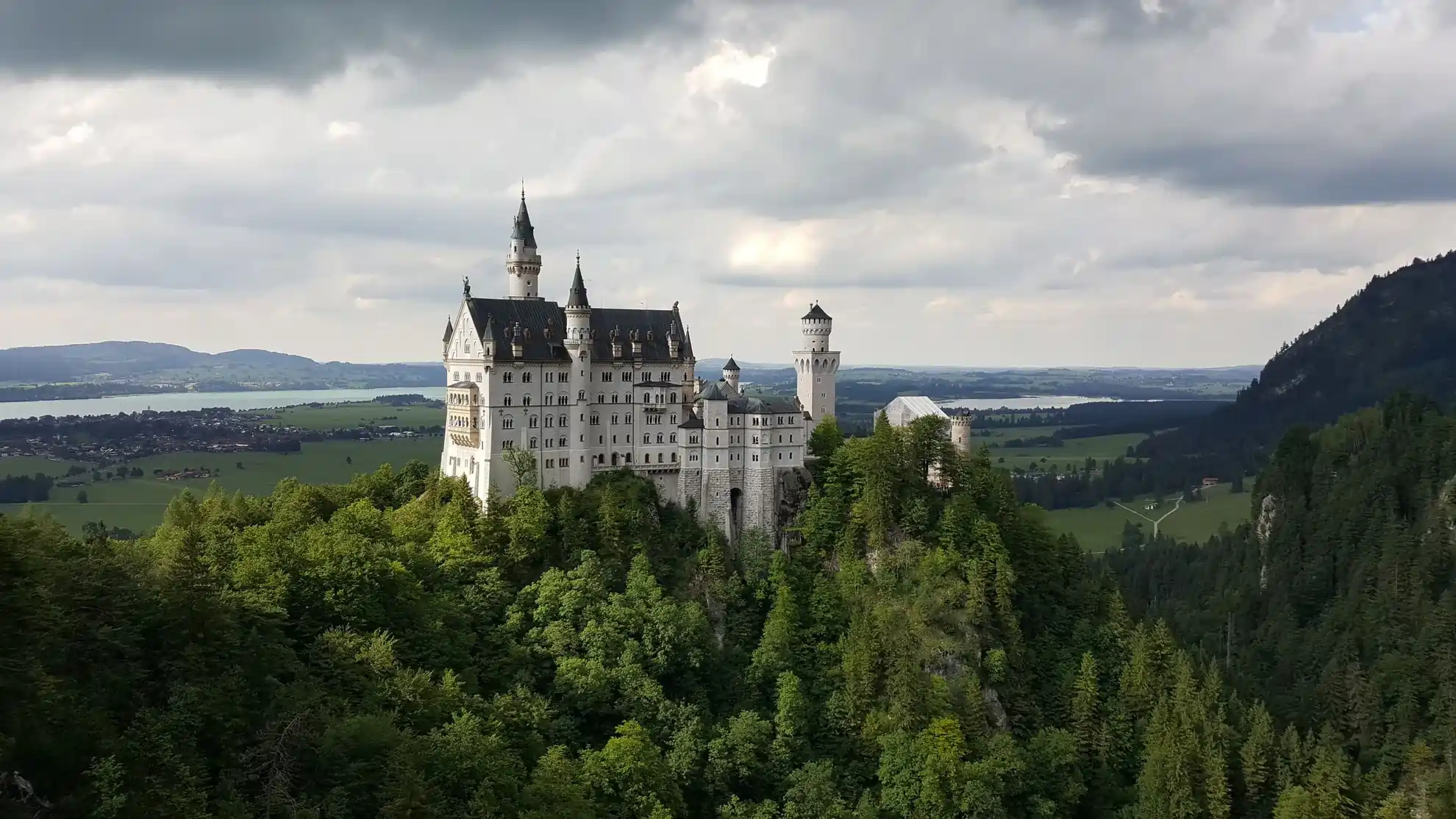
Neuschwanstein Castle Bavaria Germany 01
Schwangau, Bavaria Built 1869 Most Visited

Neuschwanstein Castle

Built by King Ludwig II of Bavaria as a private retreat, Neuschwanstein draws over 4 million visitors a year and remains Germany's single most visited building. Walt Disney was inspired by it to design Sleeping Beauty Castle in 1955. Tickets sell out weeks in advance, especially in summer, so book well ahead.
Walt Disney used Neuschwanstein as the direct model for Sleeping Beauty Castle at Disneyland.
Fairy Tale Disney-Inspired Ludwig II Day Trip
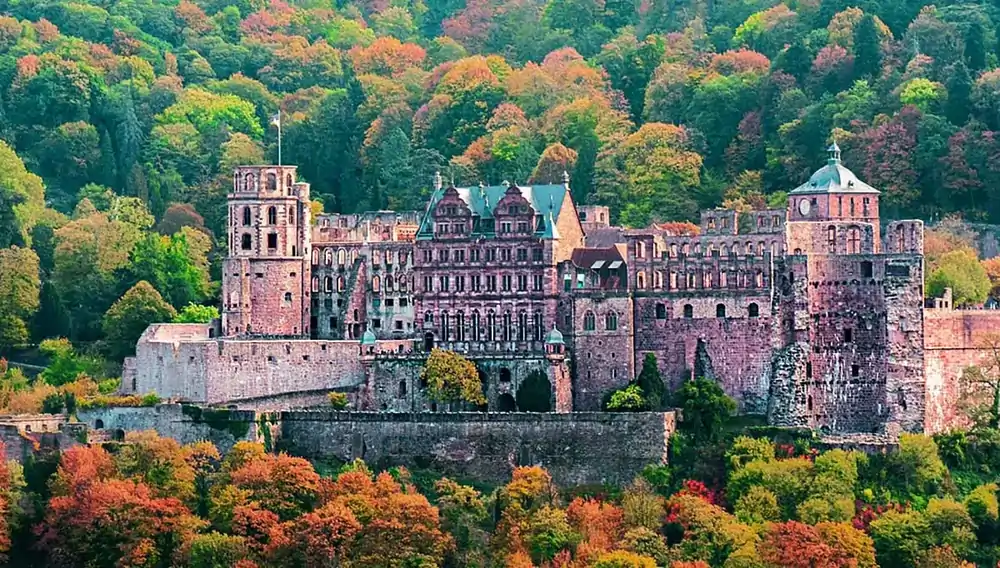
Heidelberg Castle ruins Baden-Württemberg 02
Heidelberg, Baden-Württemberg Founded 1214

Heidelberg Castle

Germany's most famous ruin rises above the Neckar River in layers of Gothic and Renaissance stonework, much of it deliberately left as rubble since the 17th-century French invasion. Inside, you will find the Great Heidelberg Tun — a wine barrel holding 221,726 litres, possibly the largest in the world. The old town below is one of the most visited in the entire country.
Houses the Great Heidelberg Tun — a 221,726-litre wine barrel that visitors can walk on top of.
Ruins Gothic-Renaissance Neckar River Wine History
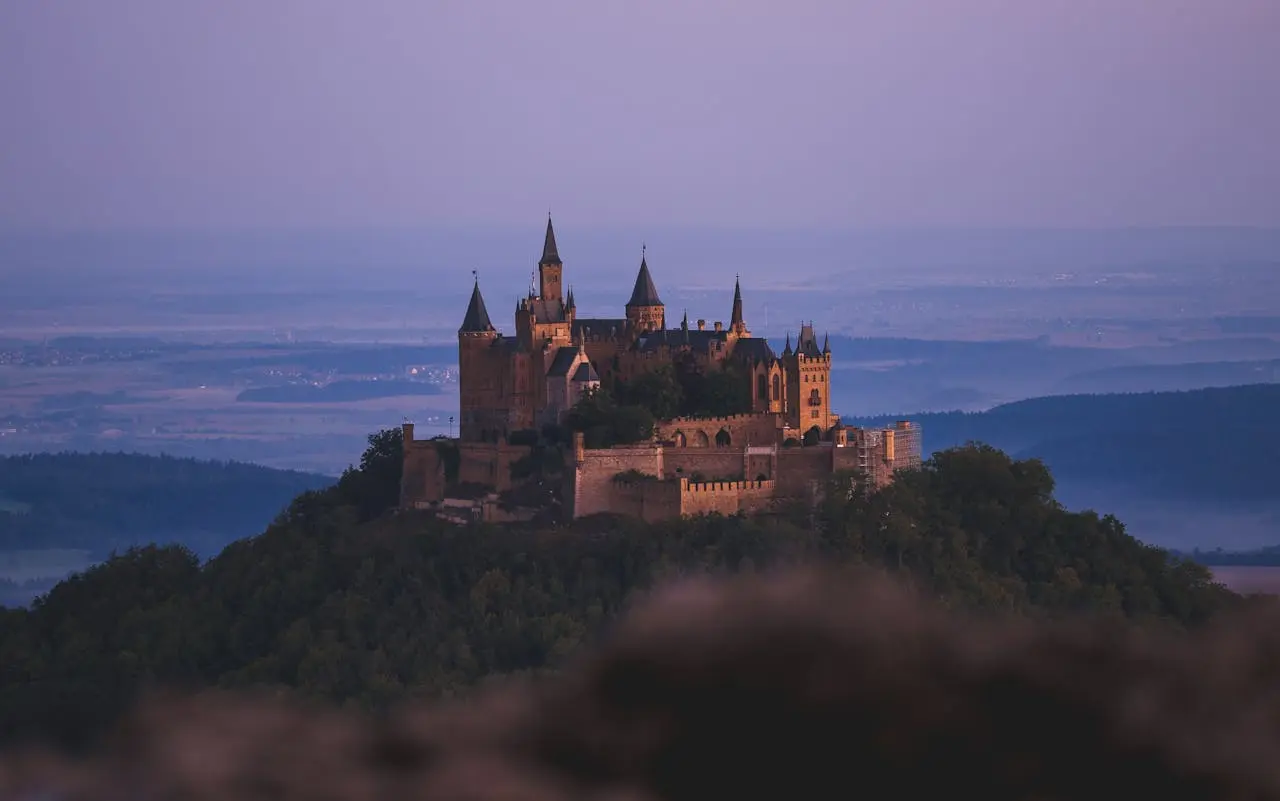
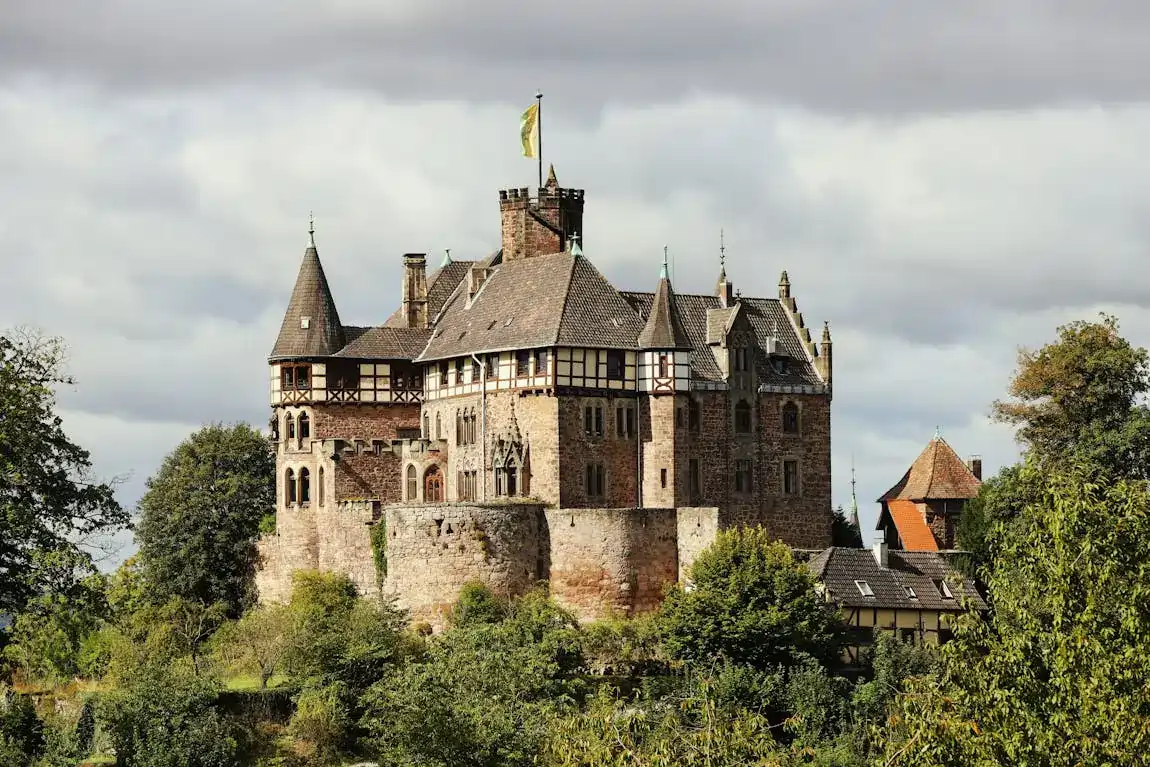
Hohenzollern Castle hilltop Baden-Württemberg Germany 03
Hechingen, Baden-Württemberg Current: 1846–1867 Royal History

Hohenzollern Castle

Sitting 855 metres above sea level on a solitary hilltop, Hohenzollern was the ancestral seat of the dynasty that produced every King of Prussia and every German Emperor. Clouds wrap the towers on most mornings, giving it an almost mythical look. The interior holds Prussian royal regalia, military collections, and original oil portraits spanning 700 years of one family's history.
Ancestral home of the Hohenzollerns — the family that ruled Prussia and unified Germany in 1871.
Gothic Revival Royal Seat Panoramic Views
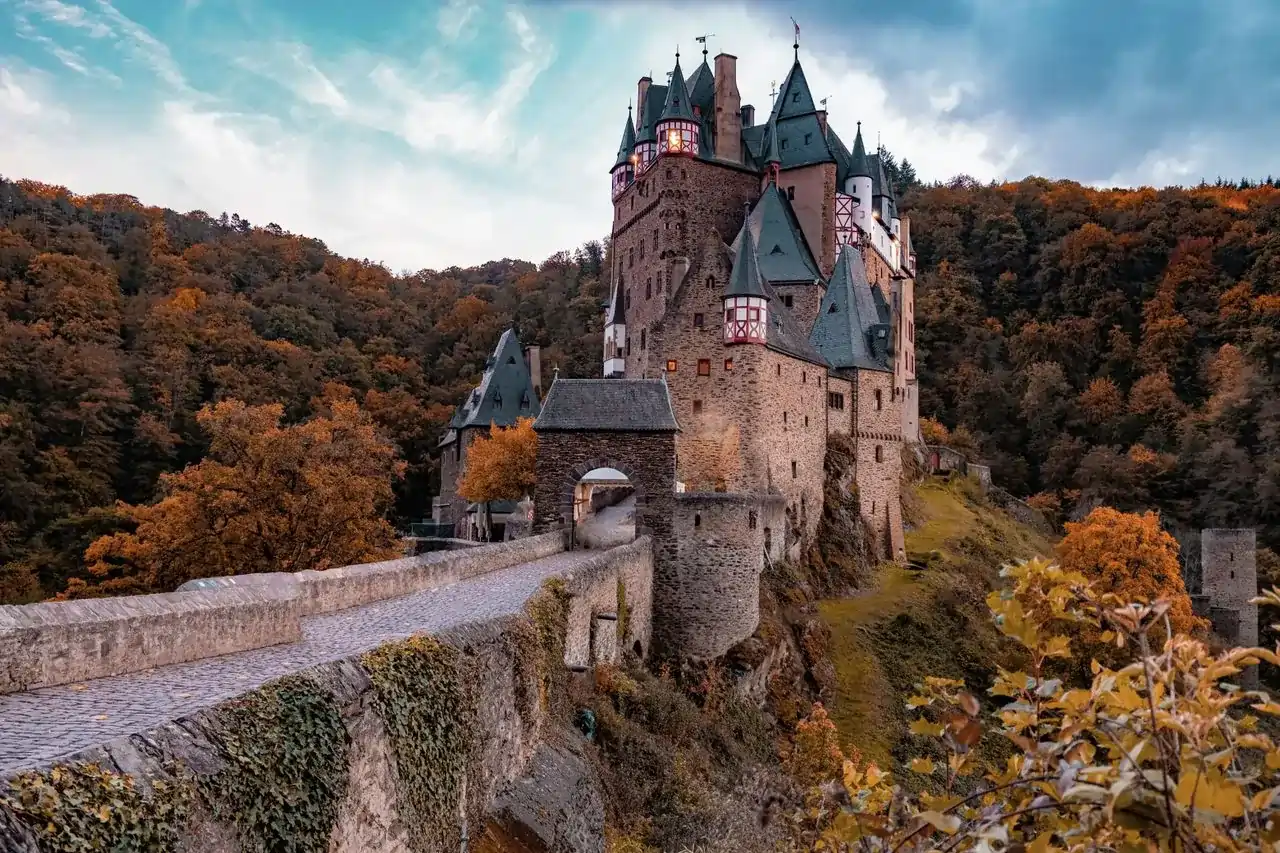
Eltz Castle Rhineland-Palatinate Germany forest valley 04
Wierschem, Rhineland-Palatinate Built c. 1157 Never Destroyed

Eltz Castle

Eltz Castle was never attacked, never conquered, and never torn down. The Eltz family has owned it for 33 consecutive generations since the 12th century, making it one of the most extraordinary survivals in European history. Sitting in a deep forested valley above the Moselle River, it was once printed on the German 500 Deutsche Mark banknote.
Owned by the same family for 33 generations and never once destroyed or conquered in 900 years.
Best Preserved Moselle Valley 500 DM Banknote Forest Castle
Wartburg Castle Eisenach Thuringia Germany UNESCO 05
Eisenach, Thuringia Built 1067 UNESCO

Wartburg Castle

Wartburg Castle is a UNESCO World Heritage Site and arguably the most historically significant castle in Germany. In 1521, Martin Luther hid here for nearly a year under the alias Junker Jörg and translated the New Testament into German — an act that shaped the German language we speak today. The castle also hosted Elizabeth of Hungary and was a gathering point for early German nationalist movements centuries later.
Martin Luther translated the entire New Testament into German here in 1521, one of the most consequential acts in German linguistic history.
UNESCO Martin Luther Thuringia Forest Medieval
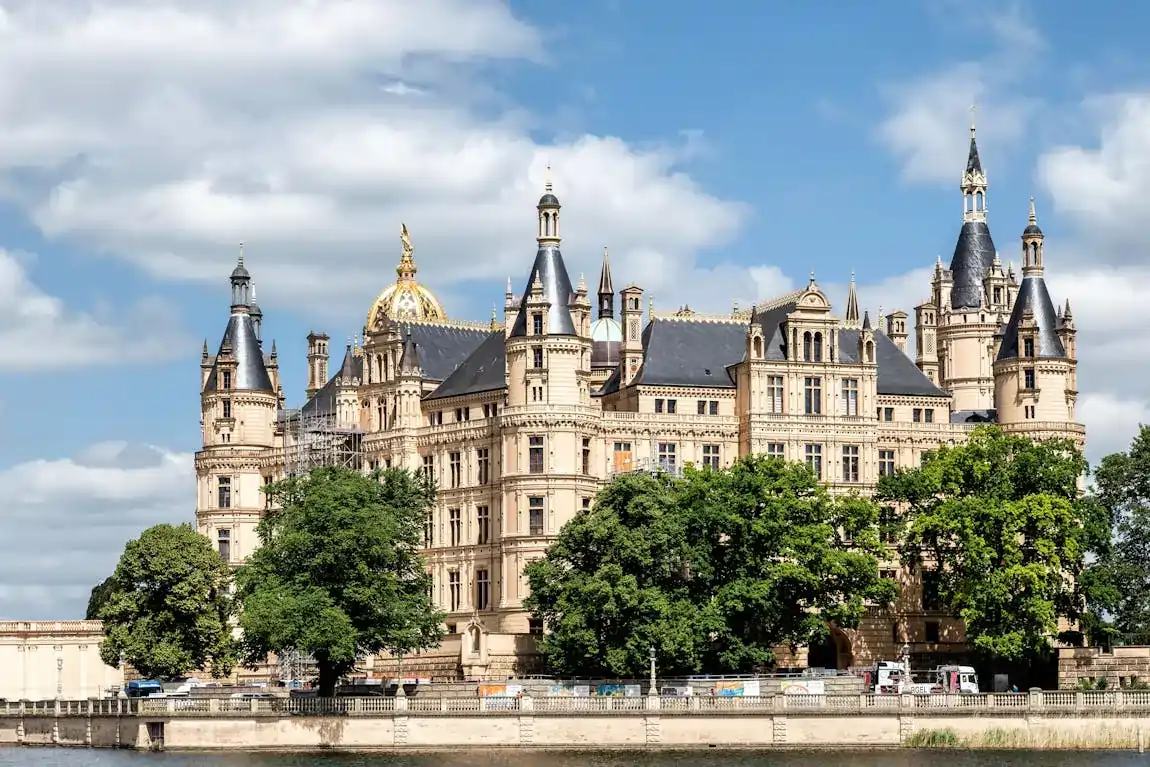
Schwerin Castle lake island Mecklenburg Germany 06
Schwerin, Mecklenburg-Vorpommern Current: 1845–1857 State Parliament

Schwerin Castle

Built on a small island in Lake Schwerin, this neo-Gothic and Baroque castle is regularly called the Neuschwanstein of the North. It mixes architectural styles from five centuries — Gothic, Renaissance, Baroque, Neoclassical, and Biedermeier — in a way that somehow feels unified. It still functions as the state parliament of Mecklenburg-Vorpommern, making it one of the few active legislative castles in the world.

One of the only castles in the world that serves as an active state parliament building today.
Lake Island State Parliament Northern Germany Multi-Style

Planning to travel through Germany and visit multiple castles? If Berlin is your base, our Things to Do in Berlin guide includes some solid day trip options from the capital.
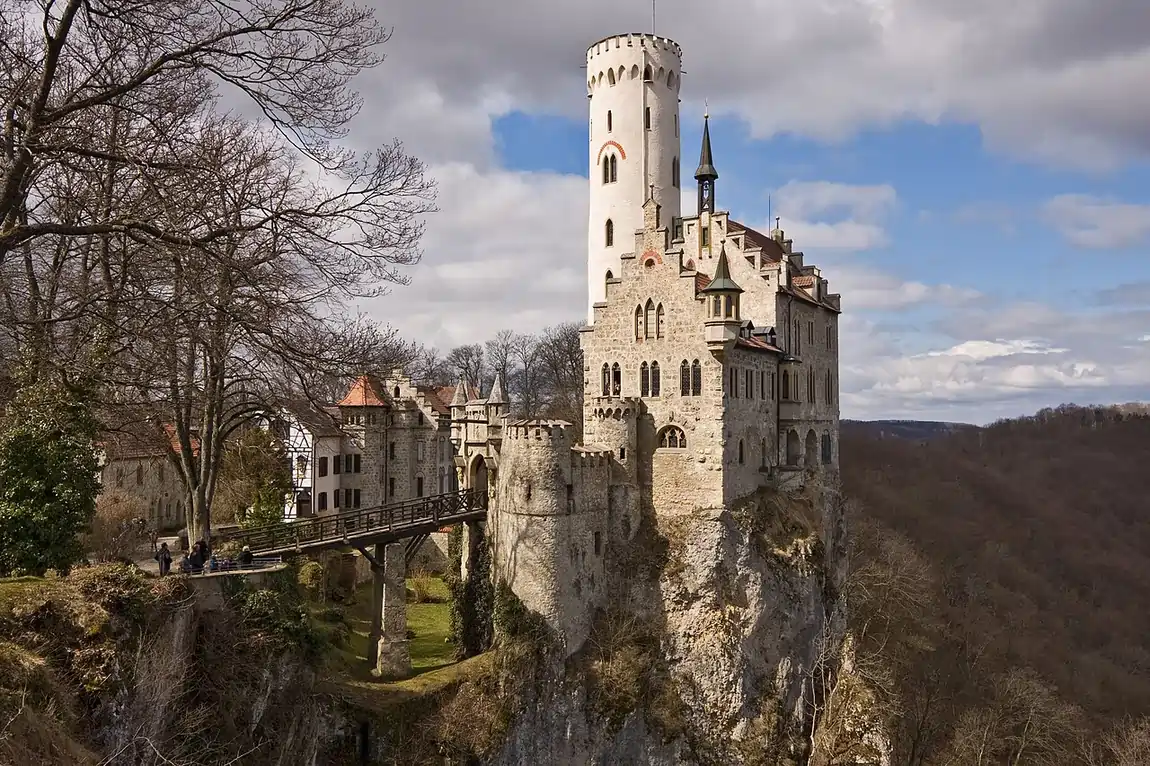
Lichtenstein Castle cliff Swabian Alb Germany 07
Honau, Baden-Württemberg Rebuilt 1840–1842

Lichtenstein Castle

Lichtenstein sits at the edge of a sheer 300-metre cliff above the Swabian Alb, looking exactly like an illustration from a medieval storybook. The current Gothic Revival structure was commissioned after Duke Wilhelm of Urach read Wilhelm Hauff's 1826 novel of the same name and decided he needed a castle to match it. Despite looking purely theatrical, it stands on genuine 12th-century foundations.
A castle built because a nobleman loved a novel. Wilhelm Hauff's 1826 historical fiction directly inspired its construction.
Cliff-Top Swabian Alb Gothic Revival Literary Castle
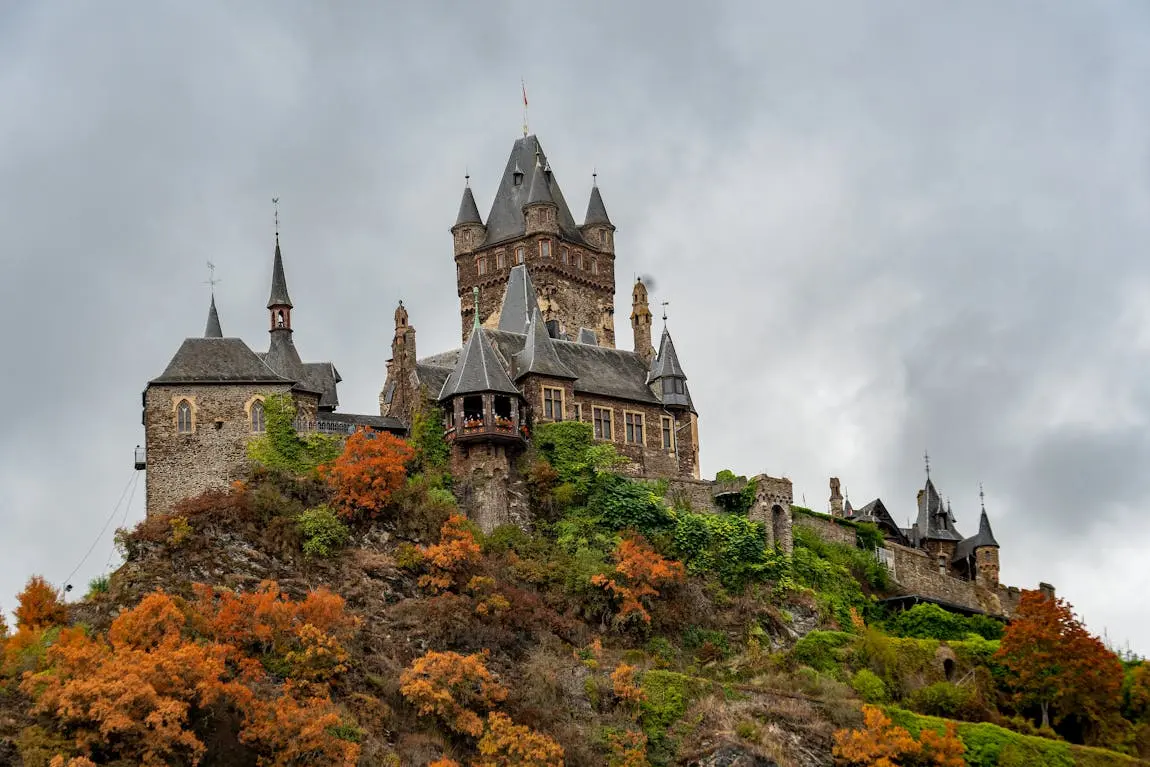
Reichsburg Cochem Moselle River Germany 08
Cochem, Rhineland-Palatinate Original c. 1000 AD Rebuilt 1868

Reichsburg Cochem

Reichsburg Cochem towers above one of the most scenic bends in the Moselle River. French troops destroyed it in 1689, and it sat as rubble for almost 200 years before a Berlin merchant bought it in 1868 and restored it in the Romantic Revival style fashionable at the time. The town of Cochem below the castle is a classic German wine village, compact and worth spending an afternoon in.

Left in ruins for almost two centuries before a private buyer fully restored it in 1877.
Moselle River Wine Region Romantic Revival Restored
Free Resource For German Learners
Free German A1 Book PDF Download

🎓 Learning German?

Get the Free German A1 Book

Visiting German castles gets a lot better when you can read the signs, ask for tickets, and understand the tour guide. Our free A1 book covers basic greetings, travel phrases, and everyday conversations — a solid start before your first German castle trip.

  • ✓  A1 vocabulary and grammar
  • ✓  Travel and directions chapter
  • ✓  Useful phrases at tourist sites
Download Free PDF →
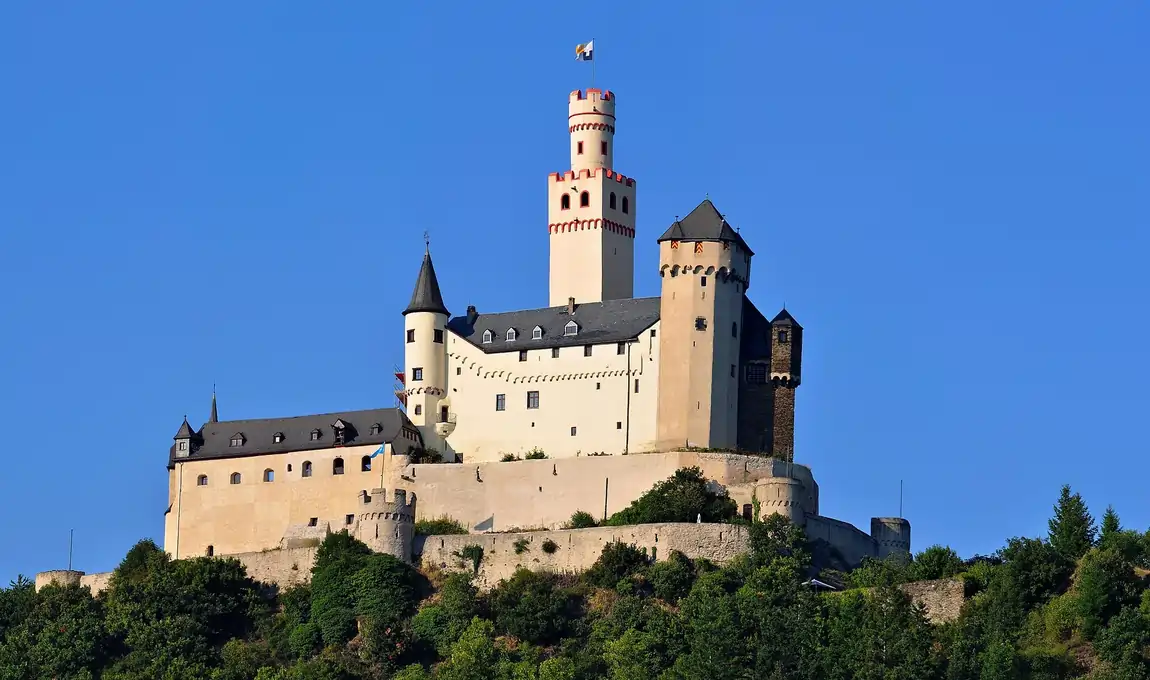
Marksburg Castle Rhine Valley Germany unmodified medieval fortress 09
Braubach, Rhine Valley Built c. 1100 UNESCO

Marksburg Castle

Marksburg holds the distinction of being the only medieval hilltop castle on the entire Rhine that was never destroyed, never substantially rebuilt, and never converted into something else. Every other Rhine hilltop castle was either razed, ruined, or comprehensively altered at some point. What you see at Marksburg is what a German castle actually looked like in the Middle Ages — complete with a working kitchen, armory, and torture chamber that were all genuinely used.
The only completely original, unmodified medieval hilltop castle on the Rhine. Every other one was destroyed or rebuilt.
UNESCO Original Medieval Rhine Valley Must Visit
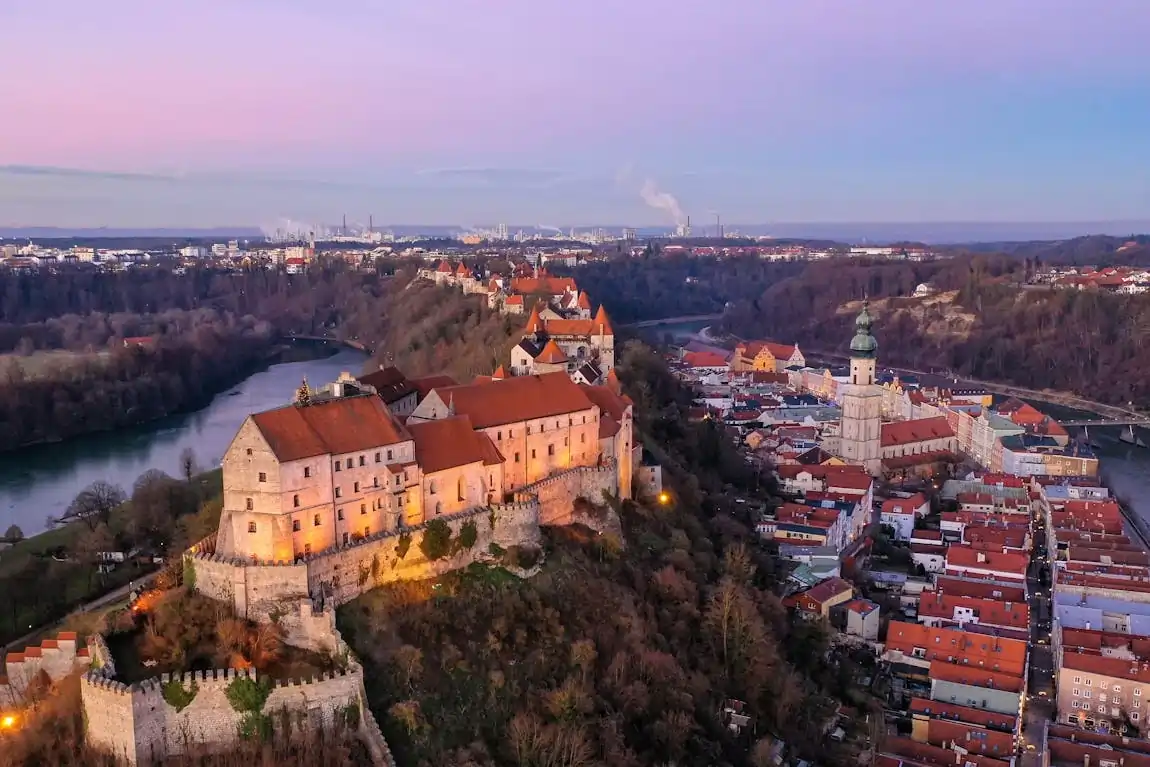
Burghausen Castle longest castle complex world Bavaria Germany 10
Burghausen, Bavaria 13th–16th Century World Record

Burghausen Castle

At 1,051 metres from gate to gate, Burghausen holds the Guinness World Record for the longest castle complex on earth. It stretches along a narrow ridge above the Salzach River in six consecutive courtyard sections, each serving as a separate line of defense. The annual jazz festival held here every summer is one of Germany's most beloved outdoor cultural events.
Guinness World Record: the longest castle complex in the world at 1,051 metres with six courtyards.
World Record Salzach River Bavarian Jazz Festival
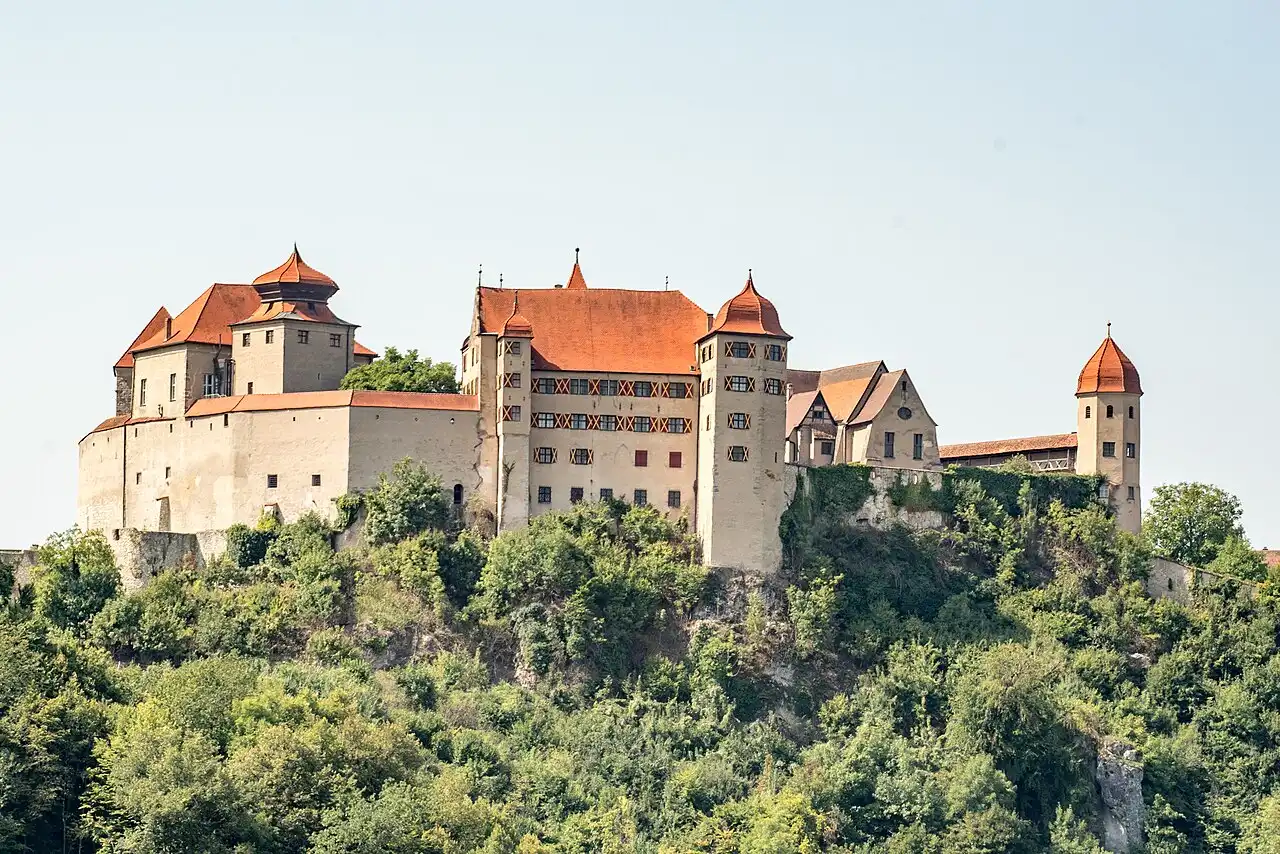
Harburg Castle Bavaria Romantic Road Germany 11
Harburg, Bavaria Built c. 1150 Romantic Road

Harburg Castle

Harburg is one of the best-preserved medieval castles in southern Germany, sitting above the small Bavarian town of the same name on a wooded ridge. Unlike many famous castles that are primarily shells or museum reconstructions, Harburg still contains original medieval furnishings from the 15th and 16th centuries. It sits directly on the Romantic Road, the famous tourist route linking Würzburg to Füssen, making it a natural stop on any castle road trip.

Located on the Romantic Road with original 15th-century interior furnishings still in place.
Romantic Road Original Interior Best Preserved Medieval

At many of these castle sites, a handful of local phrases makes the experience noticeably better. Our German Travel Phrases list covers exactly what you need at ticket counters, guided tours, and tourist information desks. You can also check our Basic German Greetings if you are just starting out.
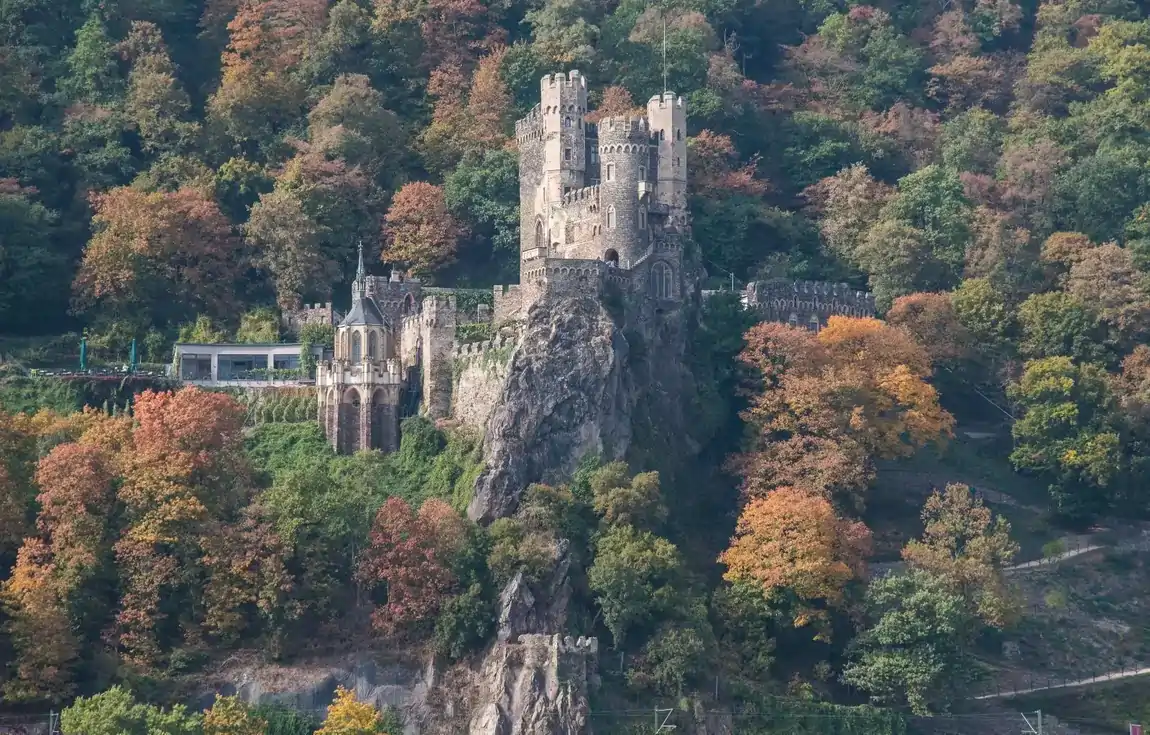
Rheinstein Castle Rhine Gorge Germany Romantic era 12
Trechtingshausen, Rhine Valley Rebuilt 1823–1829

Rheinstein Castle

Rheinstein was the first castle on the Rhine to be restored during the German Romantic era, when a renewed interest in medieval heritage swept through Europe. Crown Prince Friedrich Wilhelm of Prussia purchased it as a summer residence and converted it into a Gothic Revival showcase. The restoration of Rheinstein triggered a wave of similar projects along the Rhine and across Germany. Views from the battlements over the Rhine Gorge are among the best on the river.
The first castle in Germany to be restored in the Romantic era, directly sparking a national movement to preserve medieval sites.
Rhine Gorge First Restored Romantic Era UNESCO Area
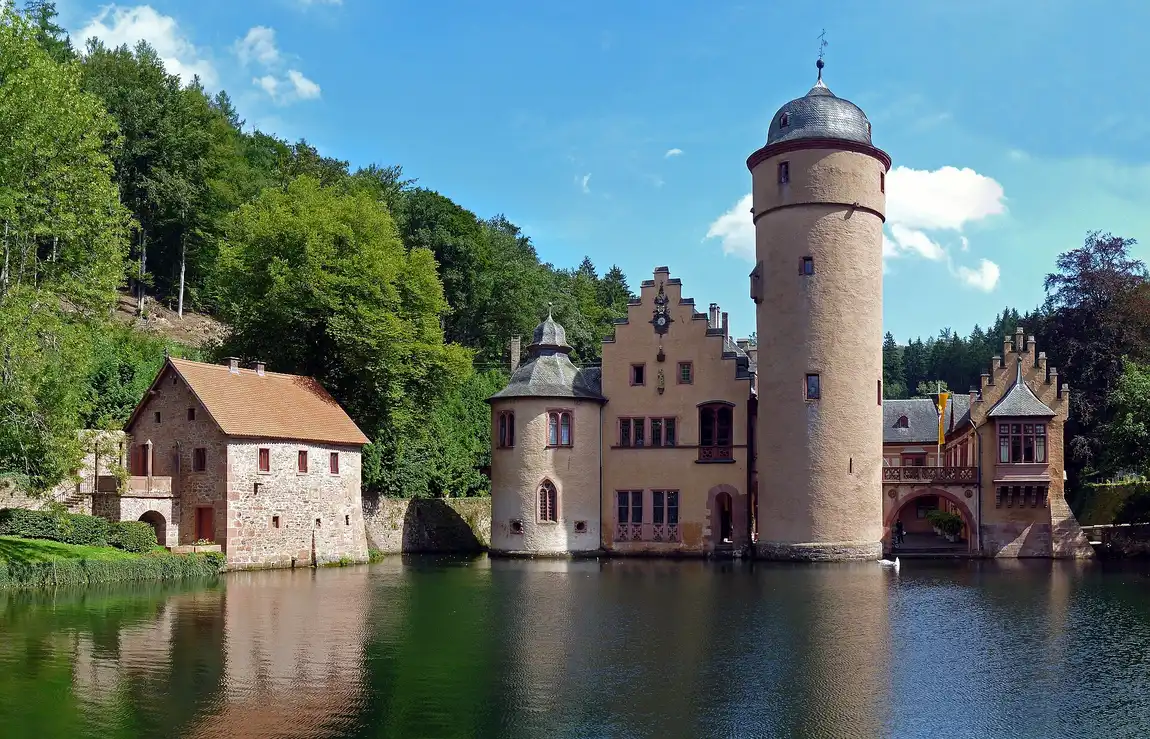
Mespelbrunn water castle Bavaria Spessart forest Germany 13
Mespelbrunn, Bavaria Built 1430–1540 Water Castle

Mespelbrunn Castle

Mespelbrunn is a moated water castle sitting in an isolated forest valley in the Spessart Hills, surrounded by water on all sides and accessible only by a single bridge. It looks completely removed from the modern world, despite being just under an hour from Frankfurt. The Ingelheim-Echter family has owned it since the 16th century and still lives there today, making it one of the most picturesque privately inhabited castles in Germany.
Still privately owned by the same noble family since the 1500s and surrounded entirely by a moat in a forested valley.
Water Castle Spessart Forest Private Ownership Near Frankfurt
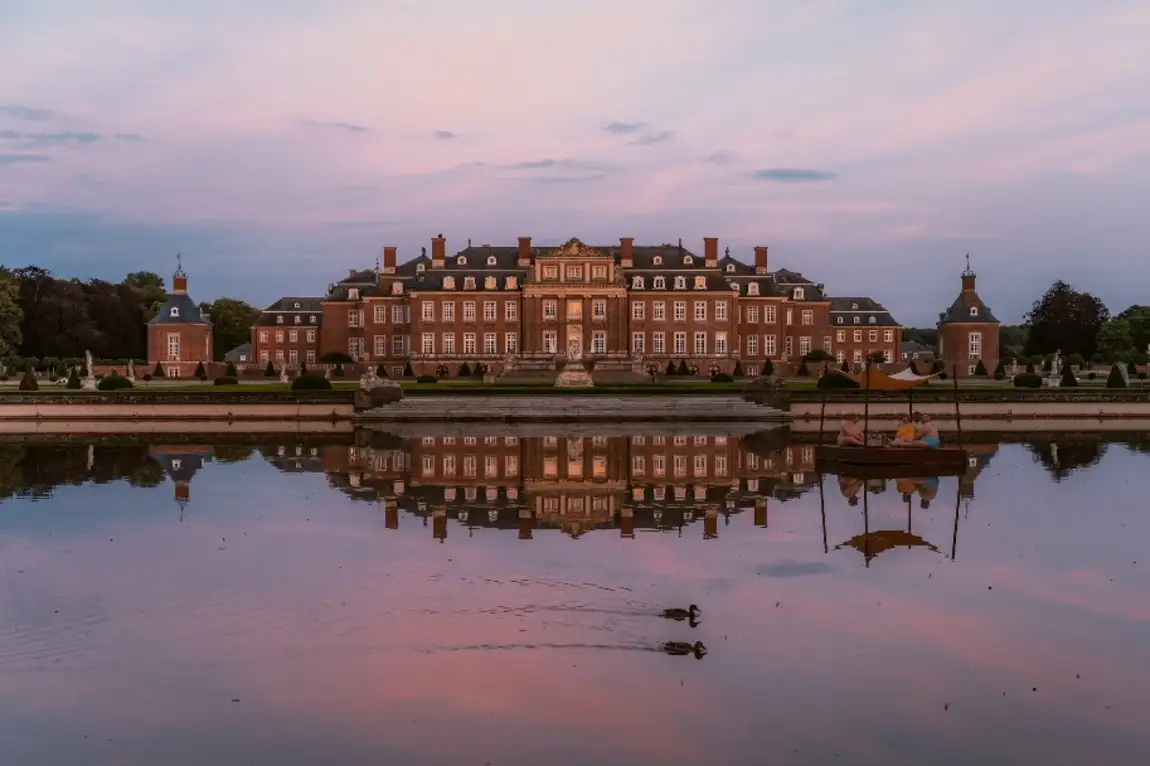
Nordkirchen Castle Baroque Westphalia Germany Versailles 14
Nordkirchen, North Rhine-Westphalia Built 1703–1734 Baroque Palace

Nordkirchen Castle

Called the Westphalian Versailles, Nordkirchen is a grand Baroque castle-palace spread across an artificial island surrounded by formal water gardens and parkland. It was designed in the French Baroque style at a scale that rivals anything in the region. Today it serves as the home of the NRW Finance Academy, which means visitors can tour the grounds and certain interiors during the academic year. The water gardens alone are worth the trip.
Called the "Westphalian Versailles" — one of the largest and most complete Baroque moated palaces in Germany.
Baroque Westphalia Water Gardens Versailles of Germany
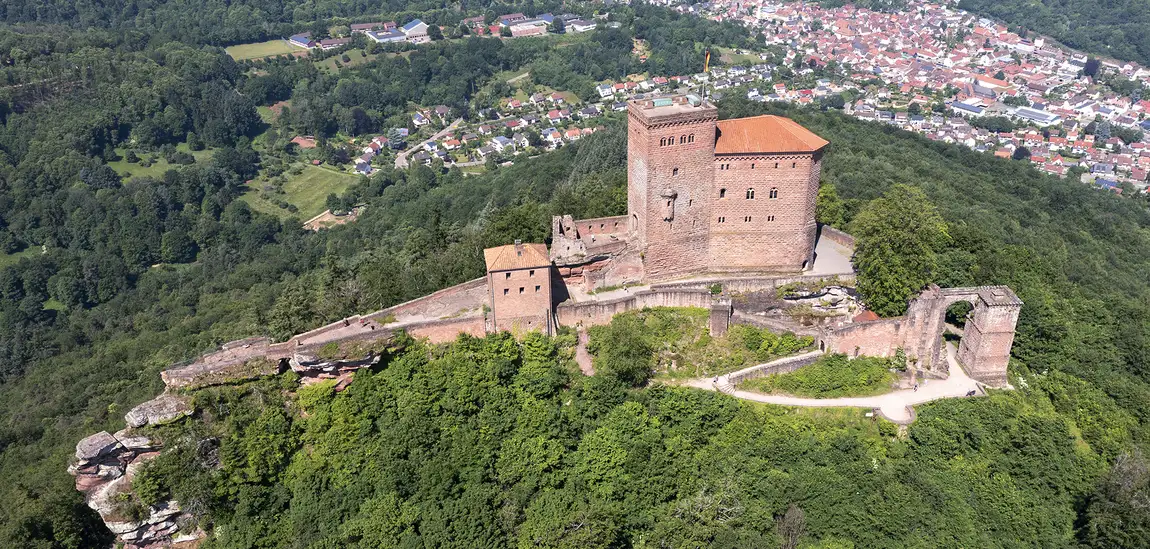
Burg Trifels imperial castle Richard Lionheart Rhineland-Palatinate Germany 15
Annweiler, Rhineland-Palatinate Built c. 1000 AD Imperial Castle

Burg Trifels

Burg Trifels was one of the most strategically important fortresses in the Holy Roman Empire, serving as the imperial treasury and repository for the Crown Jewels for centuries. Its most famous chapter: English King Richard the Lionheart was held prisoner here in 1193-94 after being captured returning from the Third Crusade. The ransom paid to free him — 150,000 marks of silver — was equivalent to three times the annual revenue of England.

English King Richard the Lionheart was imprisoned here in 1193. His ransom amounted to three times England's annual national income.
Imperial Castle Richard Lionheart Crown Jewels Palatinate Forest

Before You Visit German Castles

A few things that will make your trip noticeably better.

📅

Book Neuschwanstein Early

Timed tickets for Neuschwanstein sell out weeks in advance from April to October. Buy through the official ticket portal, not third-party resellers. The best view of the castle is from Marienbrücke bridge, just a short walk uphill from the entrance.

📌

Cluster Your Castles

The Rhine Valley has Marksburg, Rheinstein, Stolzenfels, and several others within a 50-kilometre stretch. The Moselle Valley links Eltz and Cochem in a single day. Bavaria's Romantic Road connects Harburg, Neuschwanstein, and Lichtenstein in one route. Plan regionally.

🏠

Weekdays Beat Weekends

Germany's most famous castles get genuinely crowded on weekends and German public holidays. Midweek visits in spring or autumn give you significantly shorter queues, better photos, and a calmer experience overall.

🚂

Use Public Transport

Most major castles are accessible by regional train and bus without needing a car. The Deutschlandticket (€63/month) covers all regional transport across Germany, making castle hopping very affordable. Check our German Public Transport Guide and Transport Signs Guide for help navigating.

🗣

English Tours Are Common

Almost every major castle on this list offers guided tours in English, especially from spring to autumn. Audio guides in English are available at most entrance desks. Learning a few German travel phrases and basic greetings still helps, especially in smaller towns near the castles.

Plan for a Full Day

Most castle towns are worth spending a few hours beyond the castle itself. Heidelberg, Cochem, Schwerin, and Eisenach all have good food and local culture. After a long day, it is normal to leave a small tip at restaurants, roughly 5-10%. Read our Tipping Culture in Germany guide if you are unsure what is expected.

Germany's castles are not just postcard scenery. They are where the Holy Roman Empire stored its crown jewels, where Martin Luther hid from the Church, where Prussian kings traced their lineage, and where families have lived without interruption for 33 generations. There is no other country in Europe where you can visit this many intact medieval structures this easily.

If you are new to Germany or planning your first visit, it is worth exploring the rest of what the country has to offer beyond castles. Check out our guide on Things to Do in Berlin, or if you are curious about local life, the Sundays in Germany guide covers one of the most distinctly German cultural experiences there is.

FAQ: 15 Famous German Castles You Need to Visit at Least Once

Neuschwanstein Castle in Bavaria is the most famous German castle. It draws over 4 million visitors a year and directly inspired Walt Disney’s Sleeping Beauty Castle.

Neuschwanstein Castle inspired Disney. Walt Disney visited it in the 1930s and used its fairy tale silhouette as the model for Sleeping Beauty Castle at Disneyland in 1955.

Germany has over 20,000 known castle sites, more than any other country in Europe. Not all are intact, but hundreds are open to visitors and in excellent condition.

Burg Trifels in Rhineland-Palatinate dates back to around 1000 AD and is one of the oldest surviving castle sites. Several other castles, including Eltz and Marksburg, also have origins in the 11th and 12th centuries.

Eltz Castle in Rhineland-Palatinate was never attacked, conquered, or destroyed in its 900-year history. It has been owned by the same family for 33 consecutive generations.

Burghausen Castle in Bavaria holds the Guinness World Record for the longest castle complex in the world at 1,051 metres. It stretches along a narrow ridge above the Salzach River with six separate courtyards.

Wartburg Castle in Thuringia and Marksburg Castle in the Rhine Valley are UNESCO World Heritage Sites. The entire Upper Middle Rhine Valley, which includes several castles, is also a UNESCO-listed landscape.

Late spring and early autumn (May, September, October) offer the best combination of good weather and smaller crowds. Midsummer is the busiest period, especially at Neuschwanstein, where tickets sell out weeks in advance

Yes, most major German castles are reachable by regional train and bus without a car. The Deutschlandticket covers all regional transport across Germany and makes multi-castle trips very affordable.

It depends on what you are looking for. Neuschwanstein is the most iconic. Eltz Castle is the most atmospheric and best preserved. Marksburg is the most authentic medieval experience. Heidelberg offers the best combination of castle and town in one visit.


Discover more from Elan German

Subscribe to get the latest posts sent to your email.

Free Download

📘 A1 & Beyond Study Book

Real-Life German for Beginners

Complete grammar, vocabulary & exercises, built for actual use, not just exams. Free PDF, straight to your inbox.

Get the Free Book →

No cost. No spam. Instant delivery.

Elan German

Master German with Confidence

Liked what we do? Support us via PayPal or UPI. Every bit helps! 🙏

Elan German
Privacy Overview

This website uses cookies so that we can provide you with the best user experience possible. Cookie information is stored in your browser and performs functions such as recognising you when you return to our website and helping our team to understand which sections of the website you find most interesting and useful. Check out our Privacy Policy page for more information.