

New Year’s Eve in Germany: Silvester Traditions Explained
Silvester and New Year's traditions in Germany center on the German name for New Year's Eve, named after Pope Sylvester I. Germans celebrate with private firework displays that anyone can legally buy and set off for a few days around December 31, house parties, and a peculiar shared ritual, nearly the entire country watches "Dinner for One," an eleven minute British comedy sketch that is barely known in Britain itself but has aired on German television every year since 1972. Other customs include Bleigiessen, melting small metal or wax pieces to predict the year ahead, and toasting at midnight with sparkling wine while wishing everyone "Guten Rutsch." This page covers the full picture, the sketch itself, the fireworks culture, and the smaller superstitions that round out a typical German Silvester night.
For newcomers, Silvester and New Year's traditions in Germany can feel genuinely surprising the first time around, since the sheer volume of legal amateur fireworks, the specific comedy sketch everyone quotes, and the food customs are all quite different from how most other countries mark the same night. Understanding the basics ahead of time turns a confusing evening into one of the more memorable cultural experiences of living in or visiting Germany.
The Sketch Almost No One in Britain Has Seen
"Dinner for One" is a short black and white comedy sketch about an elderly woman celebrating her birthday dinner with four imaginary guests, played by her increasingly drunk butler. It was recorded in 1963 for a German television broadcaster and quietly became a national institution. German channels air it repeatedly on December 31 every single year, often multiple times across different networks, and the phrase "the same procedure as every year" has become a widely recognized saying in German pop culture, sometimes used in completely unrelated contexts as a shorthand for routine.
Ask a British person about it, and most have never heard of it. Ask any German, and they can probably quote it. The sketch has even entered the Guinness World Records as the most frequently repeated television program in history, a title earned entirely through decades of German broadcasting habits rather than any international fame.
Part of its staying power comes from nostalgia, many Germans grew up watching it with family every year, and switching it on has become as much a part of Silvester as the fireworks themselves. The dinner for one tradition endures precisely because families with young children often introduce them to the sketch specifically because it marks the transition into the new year, regardless of whether anyone in the room fully understands the English dialogue.
Regional television stations sometimes air slightly different versions or dub certain lines, and a handful of theatres and comedy clubs now stage live reenactments in December as a novelty event. Tourists who ask locals about German new year traditions are almost guaranteed to hear this sketch mentioned within the first minute of the conversation, which says a great deal about how deeply it is embedded in the culture surrounding this particular night.
The sketch's popularity has even shaped small pieces of everyday German. Beyond "the same procedure as every year," the butler's repeated line asking whether he should pour the same again has become a stock phrase used jokingly among friends and colleagues about any repeated task, long after the original scene has faded from memory for younger viewers who mostly know it as background noise on the night rather than a sketch they watch attentively start to finish.
Other Silvester Traditions Worth Knowing
Private Fireworks
German fireworks new year sales open for a few days before New Year, and cities fill with amateur displays right at midnight, unlike most countries where this stays a professional affair. Fireworks laws germany new year restrict certain zones near historic buildings for safety reasons, so check local rules if you plan to set off your own.
Bleigießen (now Wachsgießen)
A small piece of metal or wax is melted over a flame, then dropped into cold water. The resulting shape is read as a playful fortune for the coming year, often interpreted with a set of stock shapes like anchors, hearts, or stars, each with a traditional meaning. Classic lead sets were banned in the EU in 2018, so today most families use wax kits, known as Wachsgießen.
Guten Rutsch
Literally "good slide," this is the standard way to wish someone a happy new year in the days leading up to Silvester, used interchangeably in both spoken greetings and text messages.
Sekt at Midnight
Sparkling wine is the standard toast, often paired with raclette or fondue as the evening's shared meal, a format that keeps the whole group at the table cooking together rather than serving a single formal dinner.
Balcony and Window Watching
Many households step out onto balconies or gather at open windows just before midnight specifically to watch neighborhood fireworks together, turning an otherwise private countdown into a small shared moment with an entire street or apartment block, sometimes with neighbors calling greetings back and forth between buildings.
German new year superstitions extend beyond Bleigiessen too. Some households leave a small amount of every dish uneaten on New Year's Eve as a symbol of abundance for the coming year, and eating lentil soup or another dish featuring small round shapes, seen to resemble coins, is a common wish for financial good fortune. A marzipan or chocolate pig, called a Glücksschwein, is a popular small gift exchanged for luck around the same time, since pigs have long symbolized prosperity in German folk tradition.
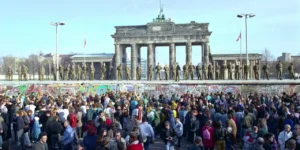
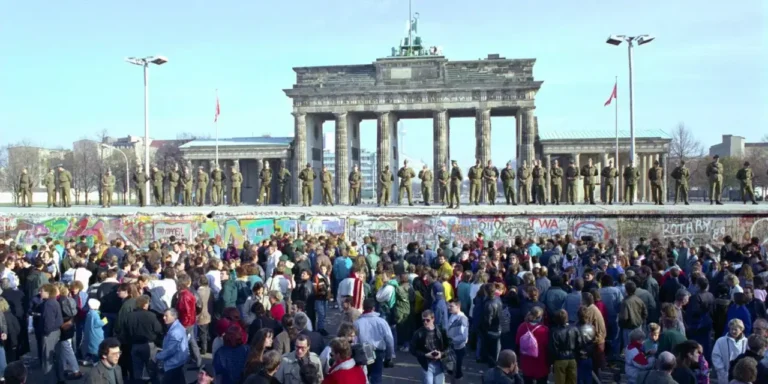
German Silvester party culture varies quite a bit by city and generation. Berlin hosts one of the largest public firework displays in Europe around the Brandenburg Gate, drawing enormous crowds, while smaller towns tend to favor private house parties or neighborhood gatherings where guests bring their own fireworks and set them off together in the street at midnight.
Safety habits have shifted over recent years too. A growing number of cities now designate firework free zones around crowded squares, hospitals and historic old towns, partly in response to injuries and partly out of concern for stressed pets and older residents. Buying eye protection alongside your fireworks is a common practical tip given to first time participants, since even a well organized private display can send debris further than expected in a crowded street.
Anyone new to Silvester and New Year's traditions in Germany should also expect public transport to run later or on a special holiday schedule in most major cities, since organizers assume large numbers of people will want a safe way home after midnight rather than driving through crowded, firework filled streets.
Fun Fact
Silvester and New Year's traditions in Germany get their name from Pope Sylvester I, whose feast day falls on December 31. Several other European countries, including Austria, Poland, and parts of Scandinavia, use variations of the same name for New Year's Eve. In Germany specifically, the tradition of amateur fireworks is tied historically to the belief that loud noises scare away evil spirits before the new year begins, a superstition that predates the modern celebratory use of fireworks by centuries.
Why is new years called silvester is one of the most searched questions among learners encountering the word for the first time, since it looks nothing like an obvious New Year term at first glance. Once the papal connection clicks, the name tends to stick permanently, and many learners find it a genuinely memorable piece of German cultural vocabulary precisely because the origin story is so specific.
A related fact worth knowing is that Sylvester as a given first name is still fairly common in some German speaking regions, particularly for boys born on or near December 31, a small naming tradition that continues to connect the pope's feast day to everyday German life well beyond the holiday itself.
German words you will hear
Learn these before you go and you will understand far more of what is happening around you.
| Guten Rutsch! | have a good slide into the new year |
| Frohes neues Jahr! | happy new year |
| das Feuerwerk | fireworks |
| der Sekt | German sparkling wine |
| der Glücksbringer | lucky charm |
| der Vorsatz | resolution |
Want to learn more German like this? Try our free German learning games.
Related Reading
Best German Christmas Markets
The season that leads right into Silvester.
German Festivals Calendar
See where Silvester fits into the full year.
Advent Traditions in Germany, Calendar and Wreath
The weeks of anticipation that build up to Silvester each year.
Authentic Traditional German Food
More on the raclette, fondue and festive dishes mentioned above.
Further Reading on German Traditions
These official and established cultural sources cover new years eve germany customs, Silvester, and German holiday traditions in more depth.
Discover more from Elan German
Subscribe to get the latest posts sent to your email.