
East West Germany Reunification: How It Actually Happened
Anyone new to East West Germany reunification should start here: formal reunification took place on October 3, 1990, less than a year after the Berlin Wall fell. It wasn't simply a matter of removing a border. East Germany adopted the West German Deutsche Mark practically overnight in a currency union that July, and the two countries merged their entire legal, administrative, and economic systems in a matter of months. The process brought genuine hardship to the East, as many state run industries collapsed once exposed to a market economy, while West Germany funded a massive, decades long investment program to rebuild infrastructure in the former East. Some of that economic gap remains visible today, over three decades later, and it still shapes how people in each half of the country talk about work, wages, and opportunity.
East West Germany Reunification: The Currency Union That Started It All
Before political reunification even happened, West and East Germany signed what's often called the currency union Germany 1990, a currency, economic, and social union agreed that summer, replacing the East German Mark with the Deutsche Mark. This single decision reshaped East German life overnight. Savings converted at a rate that, while generous for small accounts, effectively made East German industry uncompetitive against Western products almost immediately, since wages and prices adjusted to Western levels much faster than East German factories could modernize. Ordinary East Germans went from earning and spending in a currency with limited international value to holding one of the strongest currencies in Europe, which sounded like good news until store shelves filled with Western goods that local factories simply could not match on price or quality.
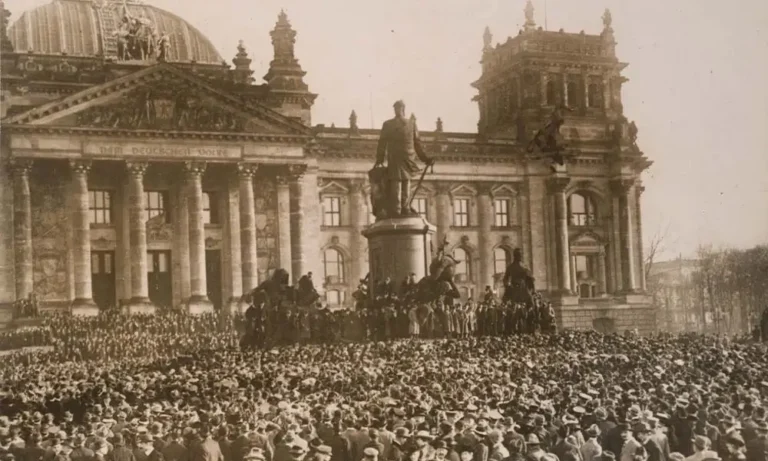
Formal political reunification followed on October 3, 1990, when the five East German states, sometimes called the new federal states, joined the Federal Republic of Germany under the existing West German constitution, rather than the two countries forming an entirely new state from scratch. This detail matters, since it meant West German laws, institutions, and administrative systems extended into the East almost wholesale, requiring an enormous, rapid transition for East German citizens navigating an entirely new legal and bureaucratic system, from property ownership rules to social insurance, a defining moment in DDR history reunification alike, and a milestone that remains central to how the country still talks about east west Germany reunification today.
German reunification challenges went well beyond paperwork. Millions of East Germans had to apply for jobs for the first time in a system that no longer guaranteed employment, and entire professions built around the old planned economy, from state industry planners to some categories of teachers and border guards, simply disappeared. Unemployment in the former East climbed sharply through the early 1990s as factories closed or were sold off through the Treuhandanstalt, a federal privatization agency tasked with finding buyers for roughly eight thousand state owned firms in only a few years. Some of those companies found investors and survived. Many others were judged unsellable and simply shut down, taking entire towns' main employers with them and pushing younger workers toward the West in search of jobs.
Chancellor Helmut Kohl pushed hard for a fast timeline rather than a slow, staged merger, arguing that delay risked instability as the Soviet Union weakened and East Germany's own government lost authority week by week. His government negotiated directly with the United States, Britain, France, and the Soviet Union through what became the Two Plus Four Treaty, since full German sovereignty still required sign off from the powers that had occupied the country since 1945. That diplomatic urgency reflected lessons from earlier German history, including the political fragmentation and street level unrest that had destabilized the Weimar Republic decades before the Cold War split the country in the first place.
Ordinary daily life changed in smaller, stranger ways too. East German passports and license plates disappeared within a couple of years, replaced by unified federal formats. Telephone numbers across the East were slowly rewired onto the Western network, a process that took most of the 1990s to finish in rural areas. Street names tied to socialist leaders were quietly swapped out in many cities, while others, particularly names honoring resistance figures or local history, were kept. Even something as basic as postal codes had to be redesigned nationally, since the two countries had used entirely separate numbering systems for decades. Universities and vocational colleges in the East also had to rebuild their curricula and qualifications to match Western standards, which meant many East German degrees needed formal recognition procedures before graduates could work in certain regulated professions.
Germany 1989 1990 Timeline: From Wall to Reunification, Month by Month
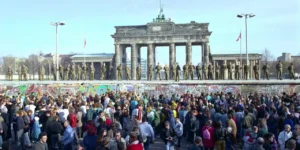
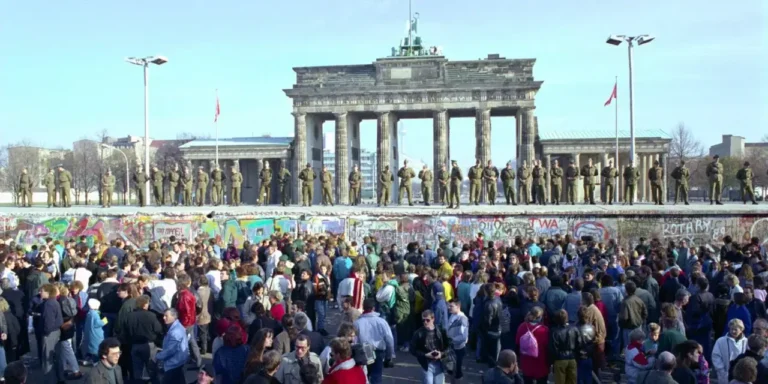
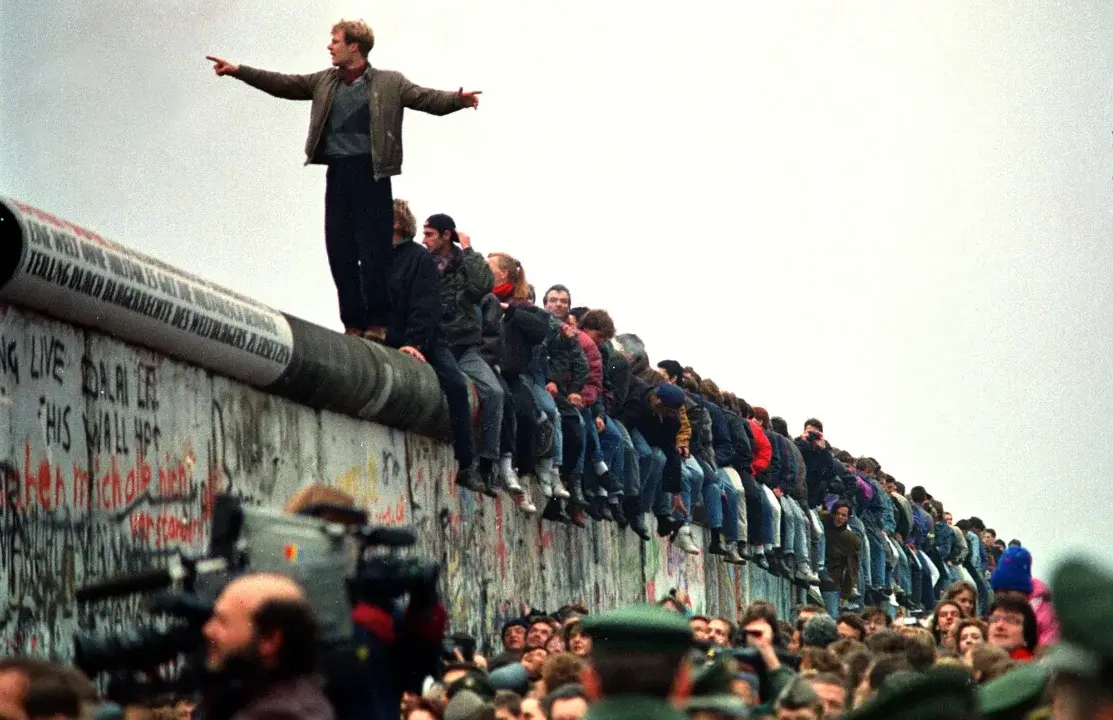
The Berlin Wall falls, and East Germans gain free movement to the West for the first time in decades, setting the stage for east west Germany reunification within a single year.
East Germany holds its first free elections, with parties favoring rapid reunification winning decisively over those who wanted a slower, negotiated merger between the two states.
The currency, economic, and social union takes effect, replacing the East German Mark with the Deutsche Mark and folding East German price controls into a Western market system almost overnight.
The Treaty of Reunification Germany relies on, commonly called the Unification Treaty, is signed, laying out the legal terms for East Germany joining the Federal Republic, including how existing property claims would be handled.
The Two Plus Four Treaty, involving both German states and the four wartime allied powers, formally restores full sovereignty to a soon to be unified Germany.
Reunification becomes official on October 3, now marked annually as German Unity Day, and this German unity day history is still taught in schools across the country.
East West Germany Gap Today: What Investment Hasn't Fully Closed
Industrial Collapse
Many East German factories, unable to compete once exposed to Western markets and wages, shut down within a few years of reunification, causing significant regional unemployment that peaked well above the national average in the early 1990s.
Solidarity Investment
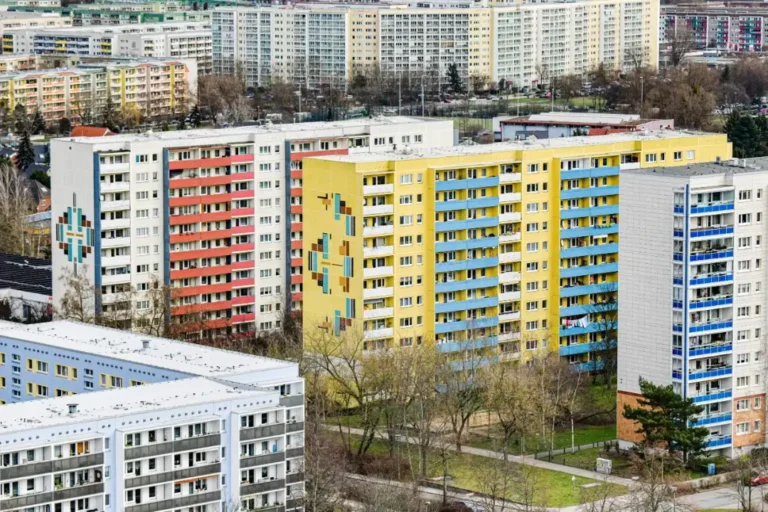
A dedicated federal fund, financed partly through a specific tax surcharge still visible on some payslips today, poured hundreds of billions of euros into rebuilding East German infrastructure over three decades, one of the clearest examples of reunification economic impact Germany has ever undertaken.
Lingering Wage Gap
Average wages and household wealth in former East German states remain measurably lower than in the West, though the gap has narrowed significantly since the 1990s, a quiet reminder of how east west Germany reunification is still playing out in everyday paychecks.
The social side of the merger is just as important as the economic one. Many East Germans describe a sense of having their country simply absorbed rather than negotiated with as equals, since almost every legal and institutional standard used after 1990 came from the West. Our companion piece on life in East Germany looks at daily existence before the change, which helps explain why some older residents still feel ambivalent about how quickly everything moved. At the same time, younger generations born after 1990 report far smaller differences in outlook between East and West, suggesting the east germany west germany merge is closing at the level of culture even where wage statistics still show a gap.
Migration added another layer to the story. Roughly one and a half million people left the former East for the West between 1989 and the mid 1990s, drawn by higher wages and more job openings, and smaller waves continued into the following decade. Some eastern regions lost enough working age residents that entire towns saw their populations shrink and age faster than the national average, which is part of why federal investment kept flowing well past the original solidarity fund's planned end date. This differs sharply from West Germany's own postwar recovery, covered in our piece on how Germany rebuilt after World War Two, which relied on outside aid rather than an internal transfer between two halves of the same nation.
Official Sources and Archives
These official federal and archival sources offer deeper documentation of east west Germany reunification and the treaty process behind it.
FAQ: East West Germany Reunification: How It Actually Happened
How did Germany reunify, and when?
Formal reunification took place on October 3, 1990, less than a year after the Berlin Wall fell in November 1989, one of the fastest transitions of its kind in modern history.
Did East Germany and West Germany form a new country together?
No, the five East German states joined the existing Federal Republic of Germany under its existing constitution, rather than forming an entirely new state.
What was the currency union in 1990?
An agreement replacing the East German Mark with the West German Deutsche Mark, effective from July 1990, ahead of formal political reunification.
Why did many East German factories close after reunification?
Exposure to Western market competition and wage levels made many state-run East German industries uncompetitive almost overnight, and a federal privatization agency sold or closed thousands of firms within a few years.
Is there still an economic gap between East and West Germany?
Yes, average wages and household wealth remain measurably lower in former East German states, though the East-West Germany gap today is much smaller than it was in the 1990s.
What is the German Unity Day history behind the holiday?
An annual public holiday on October 3, commemorating the date of formal reunification in 1990, when the East German states joined the Federal Republic.
What was the cost of German reunification?
Estimates vary, but total investment in rebuilding the former East over the following decades ran into the hundreds of billions of euros, partly funded through a dedicated tax surcharge that some workers still pay.
Do young people in Germany still notice an East versus West divide?
Surveys suggest the gap in attitudes and daily life is much smaller among Germans born after reunification, even though economic statistics still show some regional differences.
Discover more from Elan German
Subscribe to get the latest posts sent to your email.